



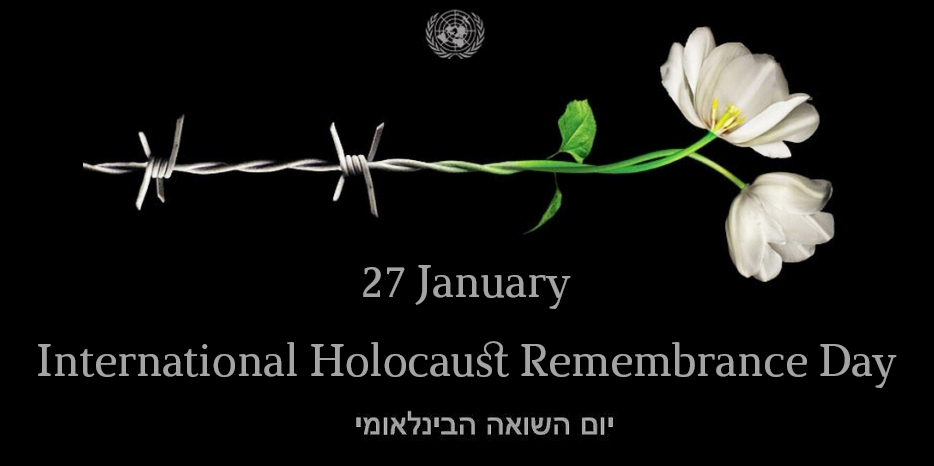
January 27th is observed as International Holocaust Remembrance Day, in accordance with UN General Assembly Resolution 60/7 adopted on November 1, 2005. The document was initiated by Israel, Canada, Australia, Russia, Ukraine, and the United States, with over 90 additional countries as co-authors. The date was chosen because on this day in 1945, the Soviet Army liberated the largest Nazi death camp, Auschwitz-Birkenau, also known as Auschwitz – which became a symbol of the Holocaust, where an estimated 1.5 to 4 million people perished.
In Ukraine, International Holocaust Remembrance Day on January 27th has been officially observed at the state level since 2011.
It should be noted that in many countries, the memory of Holocaust victims is observed on other days. In France, it is July 16th, the day of the mass arrest of Jews in Paris; in the Netherlands, Holocaust Remembrance Day is observed on May 4th; in Poland – April 19th; in Romania – October 22nd; in Serbia – April 22nd. In the United States of America, ceremonies commemorating Holocaust victims are held twice – on May 8th, the day World War II ended, and on a date linked to Israel’s Yom HaShoah, either the Sunday before or the Sunday after it, with a special ceremony in the Capitol Rotunda.
In Israel, Holocaust and Heroism Remembrance Day (Yom HaShoah) was established on the initiative of its first Prime Minister, David Ben-Gurion. Its date, set by the Israeli parliament (the Knesset), is the 27th of the Hebrew month of Nisan, and it has been observed this way since 1951, not only in the State of Israel but also in most Jewish communities worldwide.
Incidentally, it is not only in Israel that the date according to the Jewish calendar – 27 Nisan – is legally enshrined. A similar legislative decision exists in the Canadian province of Manitoba, passed in 2000.