




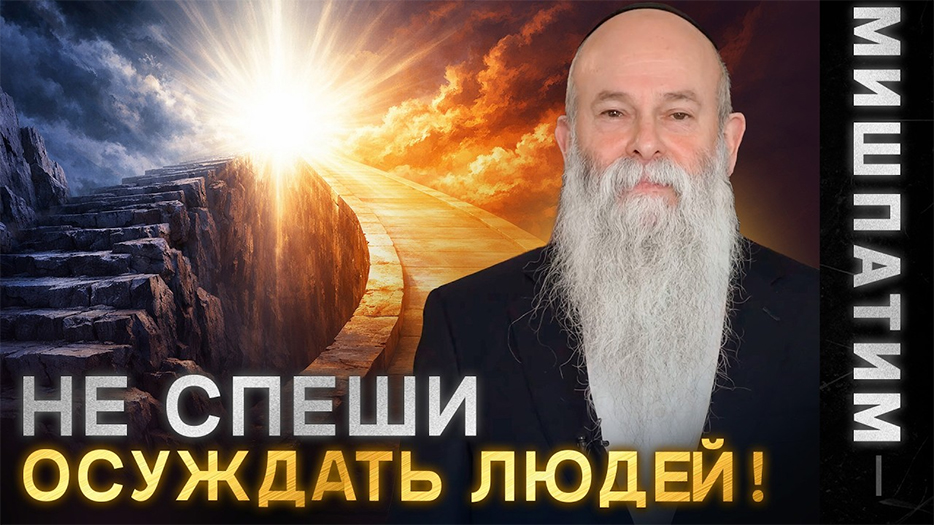
A new episode in the weekly lesson series by Chief Rabbi of Dnipro Shmuel Kaminezki has been released on the “Menorah” YouTube channel, dedicated to the Torah portion of Mishpatim. In this shiur, the Rav addresses the topic of hasty judgments and the human tendency to quickly pass sentence on others—often without knowing the full depth of their circumstances.
Parshas Mishpatim contains numerous laws governing interpersonal relationships, issues of justice, responsibility, and moral choice. However, beyond the Torah’s legal formulations lies a profound lesson on how to build a society based not only on strict judgment but also on compassion.
In his explanation, Rav Shmuel Kaminezki draws attention to an unusual detail: in the Temple, it was forbidden to ascend to the Altar using steps—instead, a gentle ramp had to be constructed. At first glance, this is an architectural feature, but the Rav reveals it as a powerful metaphor for human relations. Steps symbolize abruptness and categoricalness, while the ramp represents gradualness, patience, and delicacy in approaching another person.
The lesson features vivid and contemporary examples that help understand why hasty condemnation can ruin someone’s fate, whereas a wise and considered decision can, on the contrary, save it. The Rav recounts a story about a judge who, instead of imposing a harsh punishment, gave a person a chance, and it was this decision that became a turning point in his life.
Special attention in the episode is given to learning how to see the inner pain, fear, or trauma behind aggression, mistakes, or rudeness. This is not about justifying wrongdoing, but about adopting a deeper and more responsible perspective on what is happening. For justice without mercy can become cruel, and true strength lies in the ability to slow down and not jump to conclusions.
This episode is addressed to everyone who wants to learn how to build relationships based on respect, patience, and conscious choice, rather than on irritation and automatic criticism.
Watch the new episode on the “Menorah” YouTube channel and share your reflections in the comments.