




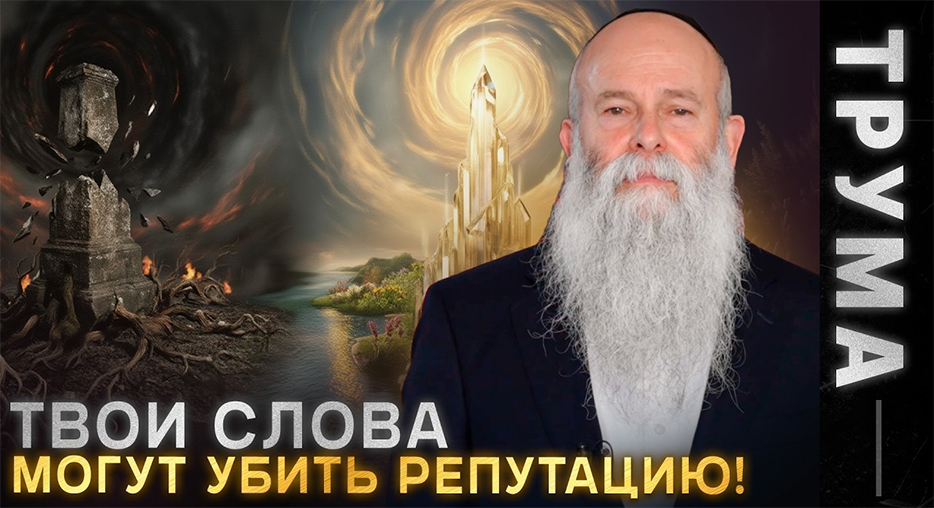
A new episode in the weekly lesson series by Chief Rabbi of Dnipro Shmuel Kaminezki has been released on the “Menorah” YouTube channel, dedicated to the Torah portion of Terumah. In this shiur, the Rav addresses a complex and delicate topic: must the truth always be spoken literally and without regard for consequences, or are there times when altering facts may serve a higher purpose?
Parshas Terumah describes the commandment to build the Mishkan—the portable Sanctuary in the desert, a place of special Divine presence. However, the Rav draws attention not only to the commandment itself but also to the order in which events are presented in the Torah. Why are certain episodes not given in strict chronological order? Why does the description of the Sanctuary’s construction precede the account of the Golden Calf sin? And why, in other places, does the Torah seem to “soften” details to preserve the honor of its heroes?
In his explanation, Rav Shmuel Kaminezki emphasizes that the Torah teaches us a high standard of interpersonal ethics. Sometimes the text alters the sequence of events or its phrasing—not by accident, but in order to protect a person’s dignity. This serves as a basis for discussing the concept of so-called “lying for the sake of peace”—is it permissible to modify the presentation of the truth when it comes to preserving another’s honor?
This episode is addressed to all who seek to deepen their understanding of Jewish tradition and learn to apply its principles in daily life—in the family, at work, and in interactions with others. Watch the new episode on the “Menorah” YouTube channel and share your reflections in the comments.