




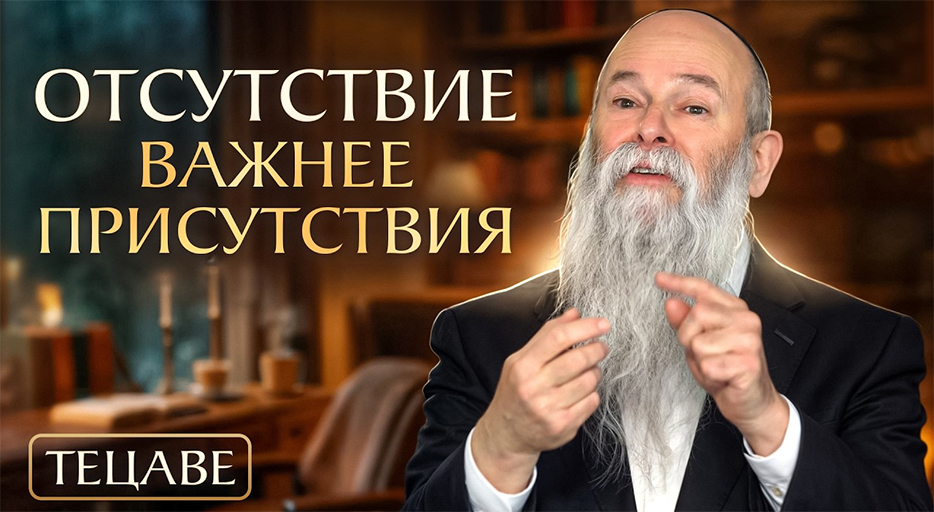
A new episode of the “Weekly Parsha” series has been released on the “Menorah” YouTube channel. Chief Rabbi of Dnipro Shmuel Kaminezki shares a profound reflection on the weekly Torah portion of Tetzaveh – addressing a theme that touches each of us.
At first glance, Parshas Tetzaveh deals with the garments of the Kohanim, the structure of the Mishkan, and the service in the Temple. However, it contains one striking detail: unlike all the preceding and following portions in the Book of Shemos, the name of Moshe Rabbeinu is not mentioned even once. This is particularly notable given that nearly all the commandments are conveyed through him.
Why does the Torah “omit” Moshe’s name? What does it mean to be present – yet seemingly absent? And can absence speak louder than any presence?
In this shiur, Rav Shmuel Kaminezki explains the profound connection between Moshe’s words “erase me from Your book” and the fact that in Parshas Tetzaveh his name indeed disappears – yet he himself remains in every line. This is a discussion about true leadership, self-sacrifice, and a level of responsibility that requires no recognition.
The video raises another existential question: why can one person who failed to show up in a difficult moment overshadow the memory of hundreds who were there? Why are joyous occasions or even days of mourning sometimes remembered not for the support received, but for the pain of someone’s absence? Why does our mind latch onto what is missing?
The Rav demonstrates that we see this same principle in the Purim story: in the Megillas Esther, the Name of Hashem is not mentioned – yet His presence is felt in every twist of events. Absence becomes a form of deeper presence.
This episode is addressed to all who have contemplated gratitude, memory, grievances, and the ability to appreciate those around us. It is a lesson not only about the Torah text but also about family, community, and personal life.
Watch the new episode of the “Weekly Parsha” series on the “Menorah” channel – and discover why sometimes absence speaks louder than presence.