



Early Wednesday morning, April 1, marks the beginning of the Fast of the Firstborn (in Dnipro, the fast begins at 4:36 AM). It lasts throughout the daylight hours, until the first Seder, which takes place on Wednesday evening, with the onset of the 15th day of the spring month of Nissan.
Seudas Siyum at the “Golden Rose” Central Synagogue will take place on April 1 after each morning minyan:
After the first minyan – Reb Yitzchak Karshenbaum
After the second minyan – Reb Shlomo Chertok and Reb Menachem Mendel Zhak
After the third minyan – Atomim Chaim Segal
The Fast of the Firstborn has customs that vary in different communities. According to the customs accepted in the Dnipro community, those who are firstborn, either to their mother or to their father, observe the fast.
The Chassidus website provides the following information about the significance of the “Fast of the Firstborn” and the customs of its observance in various communities.
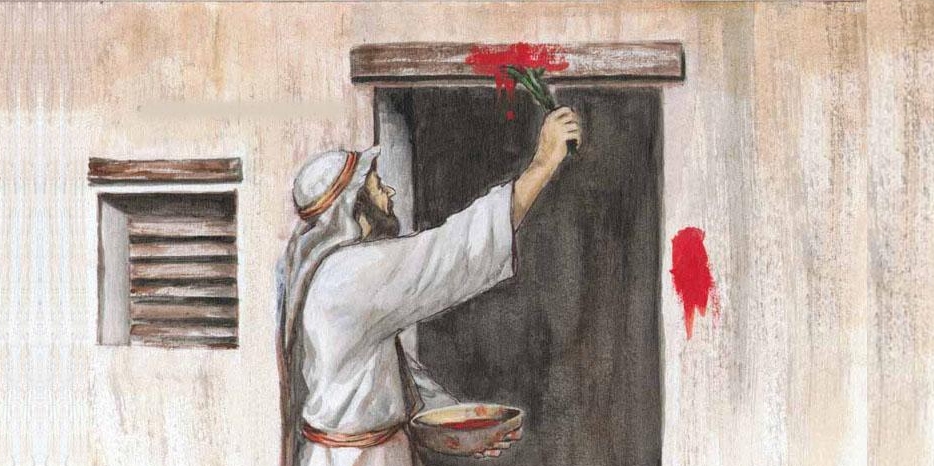
“In all communities of Israel, there has long existed a custom that firstborns fast on the eve of Pesach – in memory of the miracle that saved them from the plague that struck all the firstborn of Egypt. Generally speaking, this fast should have been observed on the anniversary of the miracle, that is, on the 15th of Nissan – for the firstborn of Egypt were struck on the night of the 15th of Nissan. However, the 15th of Nissan is a festive day, the first day of Pesach, and fasts are not observed on holidays. Furthermore, it should be remembered that the firstborn of Israel in Egypt were saved because they humbled themselves before the Almighty and acknowledged His sovereignty over the entire world, while the Egyptians continued to assert until the very end that the world belonged to them. Therefore, the Fast of the Firstborn on the 14th of Nissan serves as a reminder of how the firstborn of Israel in Egypt submitted on that day before the Almighty and acknowledged His sovereignty – especially since anyone who afflicts their body with fasting humbles their heart before the Creator.
Various customs are associated with this fast in different communities. According to one opinion, all firstborns should fast on this day – those who are firstborn to their father and those who are firstborn to their mother – both men and women. Moreover, if there is no firstborn in the household, the eldest in the home should fast, for in Egypt there was no house without a death, and if there were no firstborn, the head of the household died. Thus, there was no Jewish home that was spared by the saving miracle, which we commemorate with this fast. According to another opinion, only male firstborns should fast. In most communities, the custom is that only male firstborns fast, but a firstborn is defined as any man who was the first child born to his mother, even if a miscarriage preceded his birth.
It is customary for the father (even if he is not a firstborn) to fast in place of his minor firstborn son.
A father who is himself a firstborn and fasts in place of his firstborn son fulfills the custom for both, and his fast counts for two. However, there is an opinion that this is insufficient, and in such a case, the child’s mother should also fast.
If a firstborn boy was born after midnight on the 14th of Nissan, no fast is observed on his behalf that year, just as in Egypt, Egyptian children born after midnight on the 14th of Nissan did not die. There is an opinion that the fast should only be observed for firstborn boys who have reached thirty days of age before Pesach, for the Fast of the Firstborn, which is ultimately merely a widespread custom, cannot be more inclusive than the mitzvah of redeeming the firstborn, which is directly commanded by the Torah and is only performed after the child has reached thirty days.
If the eve of Pesach falls on Shabbos, the Fast of the Firstborn is postponed to Thursday (but not to Friday, as fasts are generally not postponed to that day). However, if the eve of Pesach falls on Friday, the fast is not postponed. There is also an opinion that the Fast of the Firstborn is not postponed at all – meaning that if the eve of Pesach falls on Shabbos, it is simply canceled.
There are other exceptions that mitigate this fast: for example, despite the fast, festive meals required by law (seudas mitzvah) that accompany circumcision ceremonies or the completion of a tractate of the Talmud (seudas siyum) are not canceled. In later times, the custom spread in many communities to hold a seudas siyum in the synagogues immediately after the morning prayer, in which all the firstborn of the community participate. In this way, they conclude the fast and are permitted to eat during the day.”