



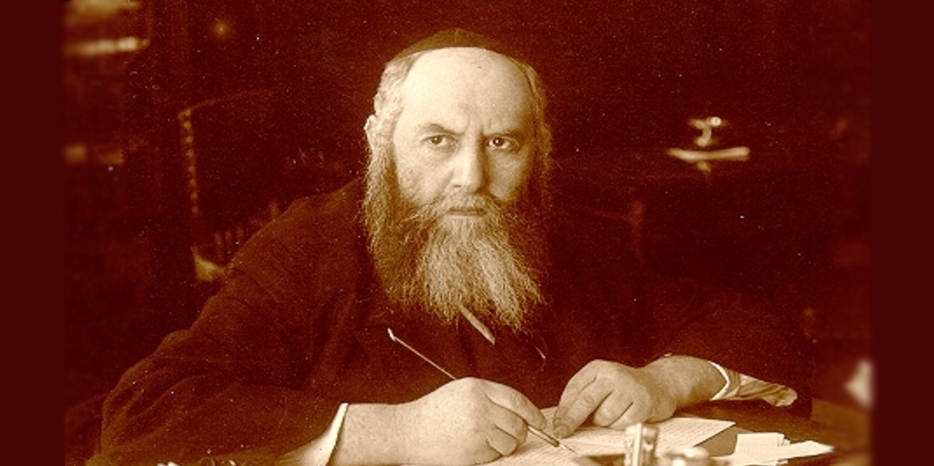
Tonight, with the onset of the 12th of Tamuz, Jews around the world will mark the 146th anniversary of the birth of the Sixth Leader of the Chabad movement, the Rebbe Rayatz (the 12th of Tamuz), and simultaneously – the anniversary of his liberation from Soviet imprisonment (the 13th of Tamuz).
In honor of these events, special events and farbrengens are organized in Jewish communities around the world. The Lubavitcher Rebbe spoke about the importance of holding farbrengens on this day.
Here is how the popular resource https://ru.chabad.org describes this most important date:
On the 12th of Tamuz, 5687 (1927), the spiritual mentor of the generation – the Sixth Lubavitcher Rebbe, Rabbi Yosef Yitzchak Schneerson (the Rebbe Rayatz) – was released from Soviet imprisonment. Shortly before this, he had been sentenced to death for spreading religion and Jewish educational activities. This event largely determined the history of Jews not only in the Soviet Union but throughout the world.
This miraculous deliverance demonstrated that the OGPU and the Yevsektsiya (Jewish section of the Communist Party) were not all-powerful, and that even these fearsome institutions were forced to retreat before the strength of the Jewish spirit and the intervention of the Almighty Himself. This inspiring fact had a tremendous impact on the subsequent development of the Lubavitch movement in the Soviet Union, and through it – on the entire spiritual life of Soviet Jewry in the following decades. The Rebbe’s arrival in Europe, and later in America, determined the spread of the Lubavitch movement throughout the world, thanks to which it became one of the most important factors in Jewish life. Therefore, the 12th of Tamuz became a holiday of liberation, celebrated annually both by Lubavitcher Chassidim and by all Jews for whom the Torah, Jewish moral values, and their preservation for future generations are dear.
Rabbi Yosef Yitzchak Schneerson was the sixth in the line of Lubavitcher Rebbes. He became the head of the Lubavitch movement in 1920, and thus had to confront the traditional cruelty of Russian rulers, compounded by the uncompromising nature of communist and atheist ideology and the servile zeal of the Yevsektsiya. At a time when many leaders believed that concessions, retreat, and accommodation were the only possible way to preserve Jewish religious values, Rabbi Yosef Yitzchak Schneerson advanced the concept of an offensive of the Jewish spirit. He established new Jewish educational institutions, trained new teachers and mentors, organized Jewish institutions, and spread the study of Torah and observance of its mitzvos by all possible and impossible means.
The crisis came in 1927, when on the 15th of Sivan the Rebbe was arrested and sentenced to death. Soon, however, the seemingly impossible occurred – the death sentence was commuted to ten years of exile in Solovki. And soon the sentence was again commuted, this time to three years of exile in Kostroma, and on the 3rd of Tamuz the Rebbe was released from prison and sent into exile. Finally, on the 12th of the month of Tamuz (in 1927, this fell on July 12), more than three weeks after his arrest, on the Rebbe’s 47th birthday, he was finally freed.
The Rebbe himself said the following about this: “May the Almighty not abandon us in His mercy, and may the merits of our Forefathers never run dry, as those who follow in their footsteps will never cease, forever and ever. And behold, on the 12th of the month of Tamuz, the third day of the week (Tuesday) … freedom was granted to me. Not only was I delivered by the Almighty on the 12th of Tamuz, but all who honor our holy Torah, observe the mitzvos, and even everyone who is simply called a Jew. This day is a day of Liberation for all who spread the knowledge of Torah among Jews…”