




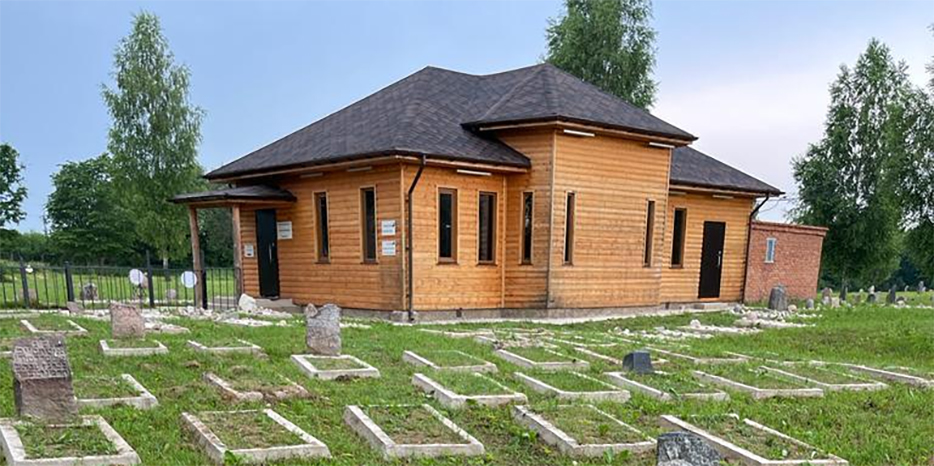
Today, the 13th of Tishrei, marks 144 years since the departure from the material world of the Fourth Leader of the Lubavitch movement, Rabbi Shmuel Schneerson, also known as the Rebbe Maharash.
The Fourth Lubavitcher Rebbe, Rabbi Shmuel (Maharash), was born on the 2nd of Iyar 5594 (May 11, 1834), in the hundredth year after the revelation of the Baal Shem Tov. His father was the Tzemach Tzedek, the Third Lubavitcher Rebbe, and his mother was Rebbetzin Chaya Mushka.
During the meal (in honor of the infant’s circumcision), R. Yehuda Leib, also a son of the Tzemach Tzedek, asked his father: “It seems that no one in our family has a similar name,” he said, and added, “perhaps in honor of the prophet Shmuel?” The Tzemach Tzedek answered him: “In honor of the water carrier from Polotsk, whose name was Shmuel, since a sage is preferable to a prophet.”
The Fourth Lubavitcher Rebbe, Rabbi Shmuel (Maharash), was a man who experienced great suffering. Even during the lifetime of his father, the Tzemach Tzedek, he was already very ill. When the Tzemach Tzedek learned of this, he said that had he known about it earlier, he would have been able to draw down such Divine light that his son would have lived at least fifty-two years, like the prophet Shmuel…
Many instructive stories are told about the Rebbe Maharash. One of them was related to the world by Reb Mendel Futerfas. “A wealthy Jew, one of the chassidim of the 4th Lubavitcher Rebbe – the Rebbe Maharash – was engaged in the timber business; he bought and sold, and made great profit. As a faithful chassid, he would usually ask for advice and request a blessing from the Rebbe Maharash regarding any major deal, and of course, he acted in accordance with the Rebbe’s advice and instruction.
Once, this chassid-merchant was offered the opportunity to invest almost his entire fortune in the purchase of a huge forest at a fairly reasonable price, and there was a strong likelihood that this could bring him great profits. But, as always, before concluding such a large deal, the chassid came to Lubavitch, entered for yechidus, and asked for the Rebbe’s blessing for such a large deal.
The Rebbe listened to all the details of the deal and said: ‘No. In my opinion, nothing good will come of this. My advice is to decline this offer.’ The wealthy chassid tried to explain that it was precisely this deal that could bring very great profits, but the Rebbe stood his ground: ‘The deal should not be concluded.’ Disappointed, the chassid left Lubavitch and returned home; because of one word from the Rebbe, he lost, in his opinion, enormous profits. Several days passed. When the traders arrived to conclude the deal and heard the chassid’s refusal, they began to laugh at him, saying that he was refusing such a profitable deal for nothing. ‘You probably simply misunderstood the terms of the deal,’ they said. ‘Perhaps there are some details that you did not tell the Rebbe, and that is why you received such an answer, for it is a well-known saying that as one asks, so one receives the answer… If you had explained all the details to the Rebbe and told him how much you could become rich, then the Rebbe’s answer would have been completely different.’
The words of the merchants had an effect on the chassid. But, after all, he is a chassid – and he set off for Lubavitch a second time, and made every effort to enter for ‘yechidus’ again. ‘Rebbe,’ said the chassid, ‘apparently last time I did not explain to you all the advantages of the deal. It is about great profits; one can truly become rich in a single day, live in complete abundance, and give much more tzedakah. I am certain that if the Rebbe had been familiar with all the terms of the deal, he would have advised me differently. That is why I have come again to ask for “consent and blessing” to conclude the deal.’
The Rebbe patiently listened to all the arguments and explanations and said: ‘This deal should not be concluded. In my opinion, you should decline it.’ Disappointed, the chassid left the room. He thought to himself that something incomprehensible was happening, for all the signs indicated that never before had he had the opportunity to conclude such a successful deal. And the Rebbe did not even try to explain, but simply said: ‘No!’ Again he returned home downcast, and again his wife and friends began to persuade him that ‘one cannot,’ ‘one simply cannot’ refuse such an opportunity. ‘You are “obligated,”‘ they told him, ‘to go and explain everything to the Rebbe very well, and then, surely, the answer will be different.’ And then the chassid went again, a third time, to the Rebbe, entered for ‘yechidus,’ presented all his arguments and explanations, and simply ‘begged’ the Rebbe to permit him to do it. The Rebbe listened to everything and again said: ‘No. It is not worth it!’ Again the chassid returned home disappointed, and when his wife, relatives, and all his friends again began to persuade him, he could no longer resist – he went and invested all his money in this profitable deal. He calmed his conscience with the thought that he would set aside for tzedakah much more than he had before… And just as the Rebbe had said, so it happened – the business failed, his situation worsened, and the chassid lost all his money on it. When he had already become convinced ‘on his own skin’ how important it is to fulfill everything the Rebbe says simply, ‘without cleverness’ – now, when he had not heeded the advice and lost his entire fortune, and in addition was tormented by pangs of conscience that he alone was to blame for what had happened – he again traveled to Lubavitch and entered for ‘yechidus’ with the Rebbe Maharash. This time, of course, in complete self-nullification and complete repentance. This time the chassid lingered at the yechidus much longer than usual, and when he came out, the chassidim surrounded him and tried to ‘extract’ from him what the Rebbe had said. Most of what the Rebbe had said to him, the chassid refused to relate, but one thing the Rebbe had told him, he did relate: ‘Chassidim come to me,’ said the Rebbe Maharash, ‘and among them are great merchants, and they ask my advice in business matters that I have never engaged in – neither I nor my fathers. Why then do they ask me about this and accept my advice and instructions that I give them? There are three answers to this question, and there are three types of chassidim.
Simple and naive chassidim say: “It is all very simple. The Rebbe – he is, after all, the Rebbe! He has the gift of insight, the gift of prophecy; his words are the words of the Living G-d, and therefore one must simply fulfill his instructions, without any cleverness!”
More sophisticated chassidim did not want to do only that which cannot be explained at all, so they explained and said: “The Rebbe constantly studies Torah and Chassidus and serves the Almighty; his mind and all his desires are completely nullified before the will of the Almighty to such a degree that his mind understands everything in accordance with the mind of the Torah. And therefore, when the Rebbe says something with certainty, it is in accordance with the mind of the Torah, and therefore there is no doubt that it will come to pass.”
And wealthy and distinguished chassidim – homeowners – say much more simply: “People come to the Rebbe from all corners of the world, and the most diverse people consult with him. Thus the Rebbe acquires practical experience and the necessary life experience in all fields, and thanks to his broad worldview the Rebbe sees what other people do not see, and therefore one must do as he says.” The Rebbe Maharash concluded: “Whichever type of chassid you may belong to, you should not have concluded this deal after you came here three times, and three times were told that it was not worth doing.”
After this, the chassidim sat at a chassidic gathering, and after they had well moistened their hearts with wine, they said: “The words of the Rebbe are undoubtedly true and will undoubtedly come to pass in any case, but the Rebbe reveals himself to each person according to how that person looks at him. One who looks at the Rebbe with simplicity and purity of soul – such a naive person, who has no progressive views at all, and who knows that the Rebbe is the Rebbe – then the Rebbe reveals and illuminates for him the essence of things in such a way that he walks a confident path, without questions, without doubts, and without problems.”
One who tries to also employ a little of his own mind and to explain the Rebbe’s line of thought – he, too, usually fulfills what the Rebbe told him, but sometimes doubts arise in him. Sometimes he tries to convince and explain that perhaps the Rebbe meant something entirely different, but in the end, he becomes convinced of the fact that the Rebbe understands far more than he does, because the Rebbe’s mind is the mind of the Torah.
One who tries to explain the Rebbe’s words by the fact that the Rebbe has sources of information and a broad worldview – he, too, usually fulfills everything told to him, but for him this is a very great trial.
He is one hundred percent certain that the Rebbe told him such and such because of this and that, but perhaps it is worth asking once more and explaining everything once more, and then, of course, the answer will be completely different. And even when he has a clear and distinct answer, he still remains in doubt whether to do it differently, G-d forbid.”