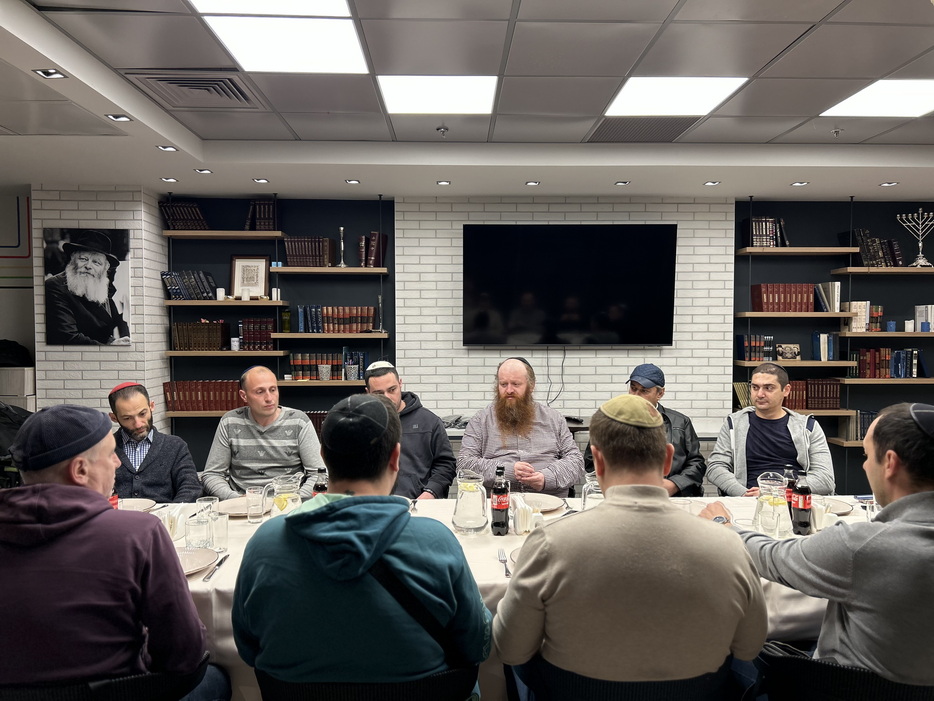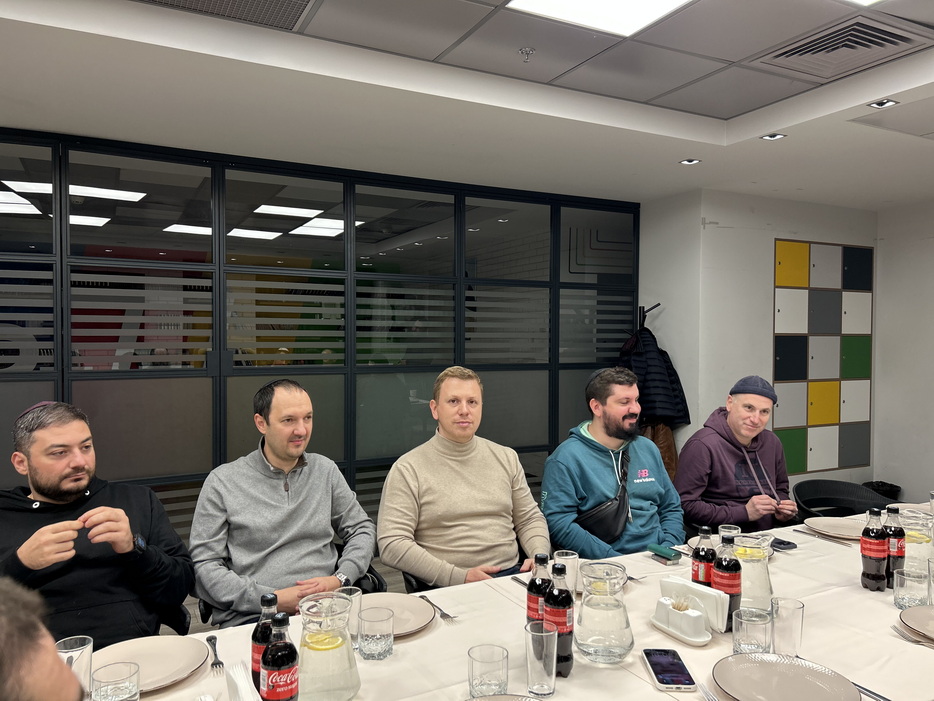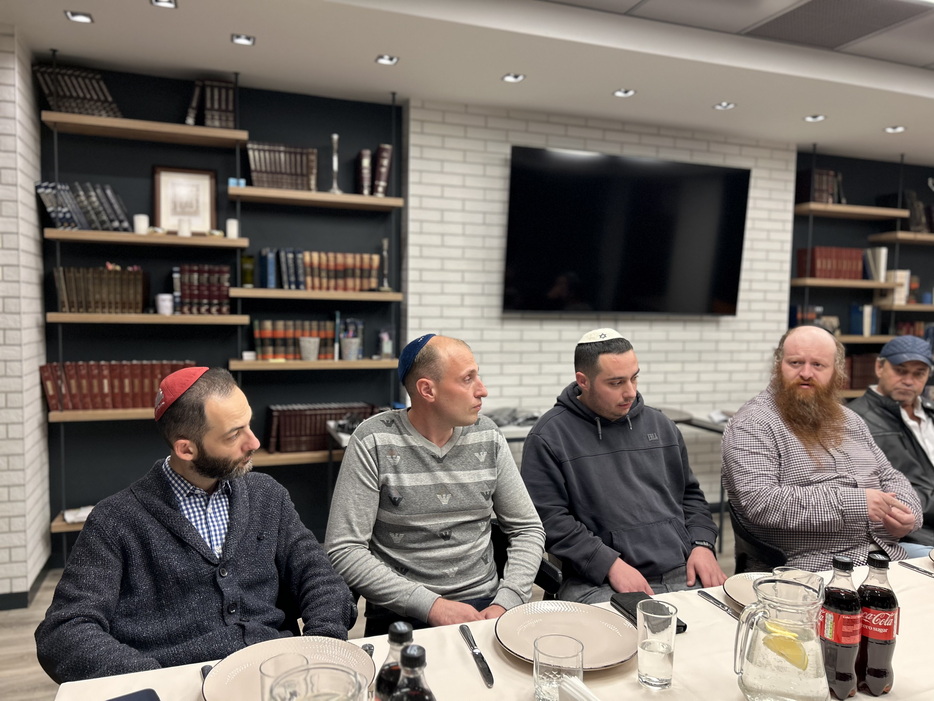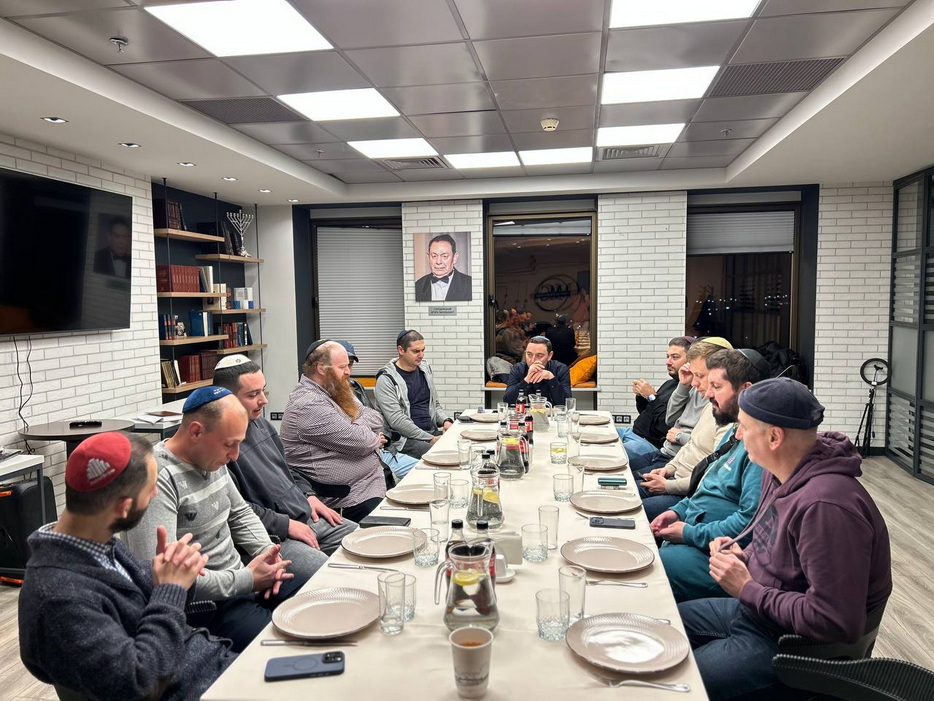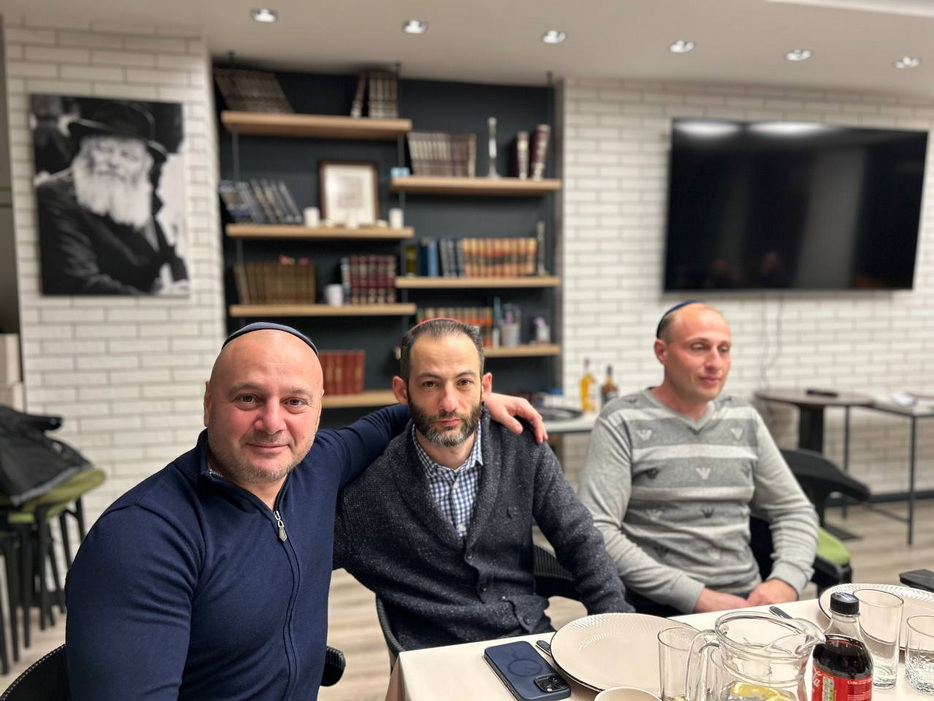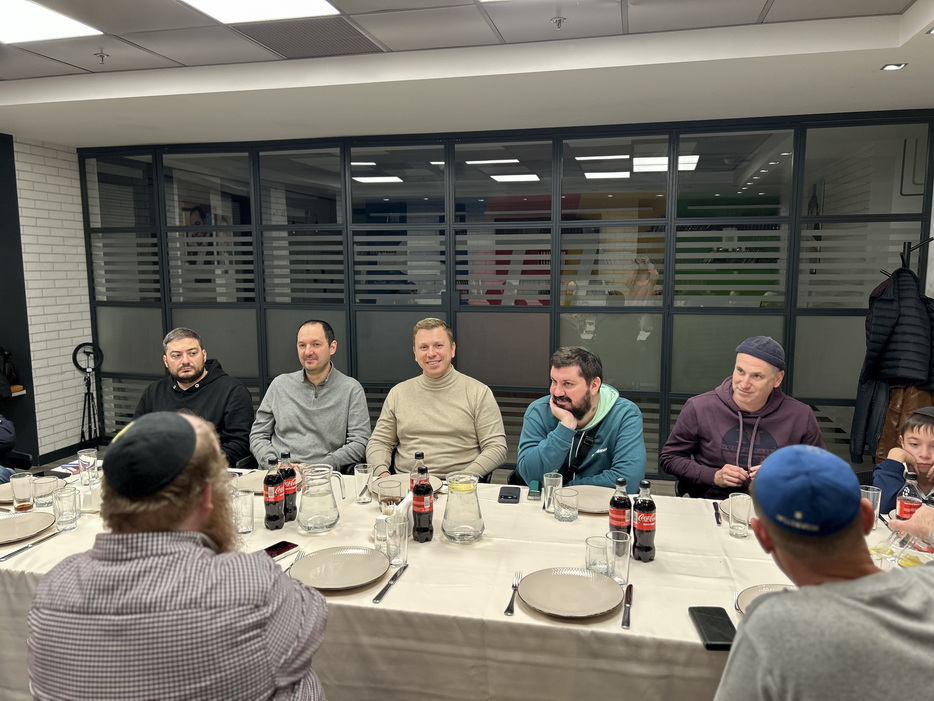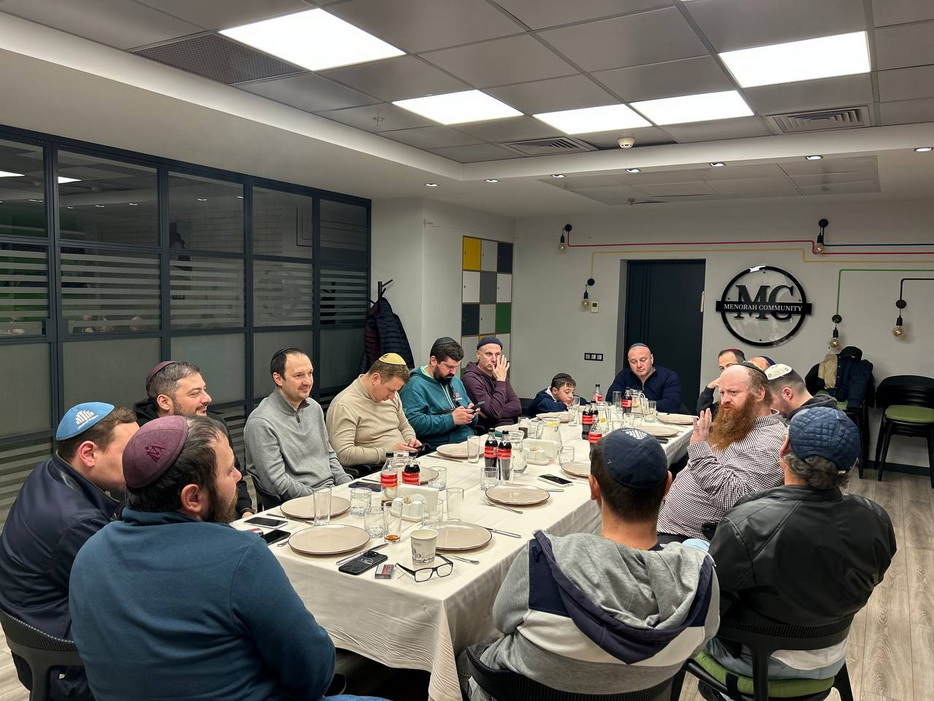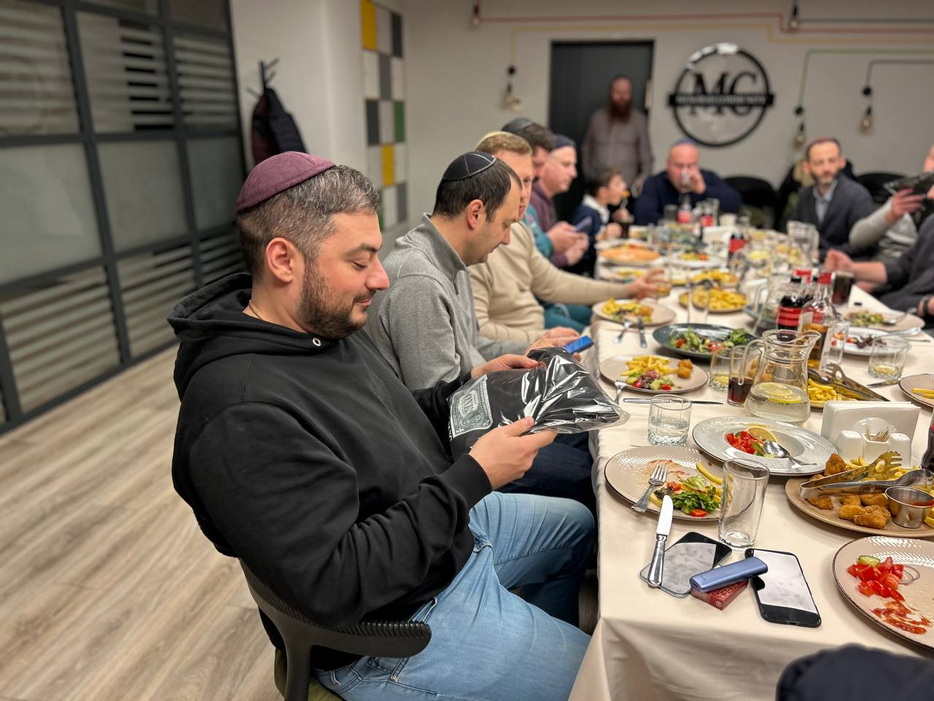




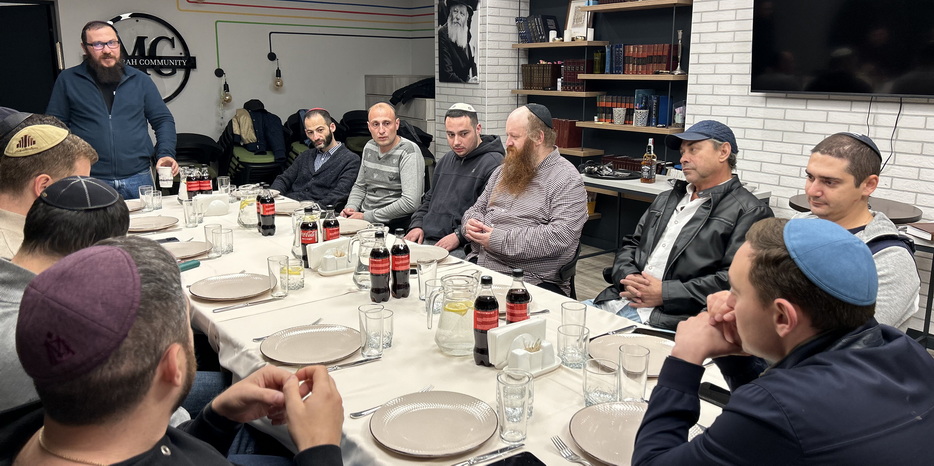
The “Menorah Community” youth project of the Jewish Community of Dnipro, which has been actively developing thanks to the efforts of the Zislin’s family, held another men’s Torah class dedicated to the weekly portion of Vayeira and to one of the most extraordinary episodes in the story of the Patriarch Avraham, who dared to turn to the Almighty with a request to spare the inhabitants of Sodom, despite their sins and crimes.
The class was conducted by the Deputy Secretary of the Dnipro Rabbinical Court, Reb Avraham Yosef Yitzchak Karshenbaum. The theme of the gathering was the question “Can one argue with the Almighty?”, which enables one to look at the story of Avraham not merely as an event of the distant past but also as a moral example that has direct relevance to the life of a modern person.
Special attention was given to why Avraham interceded for the inhabitants of Sodom, although he understood perfectly well how unworthy their deeds were. He did not try to justify evil or to call into question the justice of the Almighty, but he asked for mercy and reminded of the possibility that righteous people might exist among the sinners. In this were manifested not only his courage but also a profound sense of responsibility for the fates of other people, even those whose behavior he resolutely condemned.
The story of Avraham poses difficult questions before every person. Can one condemn a person’s deeds yet at the same time sincerely wish them good? Where does the line run between justice and mercy? And how ready are we to care for others, especially when their views and deeds evoke rejection in us? The example of Avraham teaches that faithfulness to the will of the Almighty does not free a person from responsibility for those around them, but on the contrary, demands that one not remain indifferent to the fate of others.
“The story of Avraham shows us that true responsibility for other people is manifested not only in the readiness to help those with whom we agree but also in the ability to show mercy to those whose deeds we condemn,” noted Levi Zislin, director of the “Menorah Community” project. “Such lessons help young people understand more deeply the moral demands of the Torah and the teachings of Chassidus, teach them to combine principle with compassion, and make them aware that every Jew bears responsibility not only for themselves but also for others. We are grateful for the opportunity to carry out this important work within the united and cohesive Jewish Community of Dnipro under the leadership of Chief Rabbi Shmuel Kaminezki.”