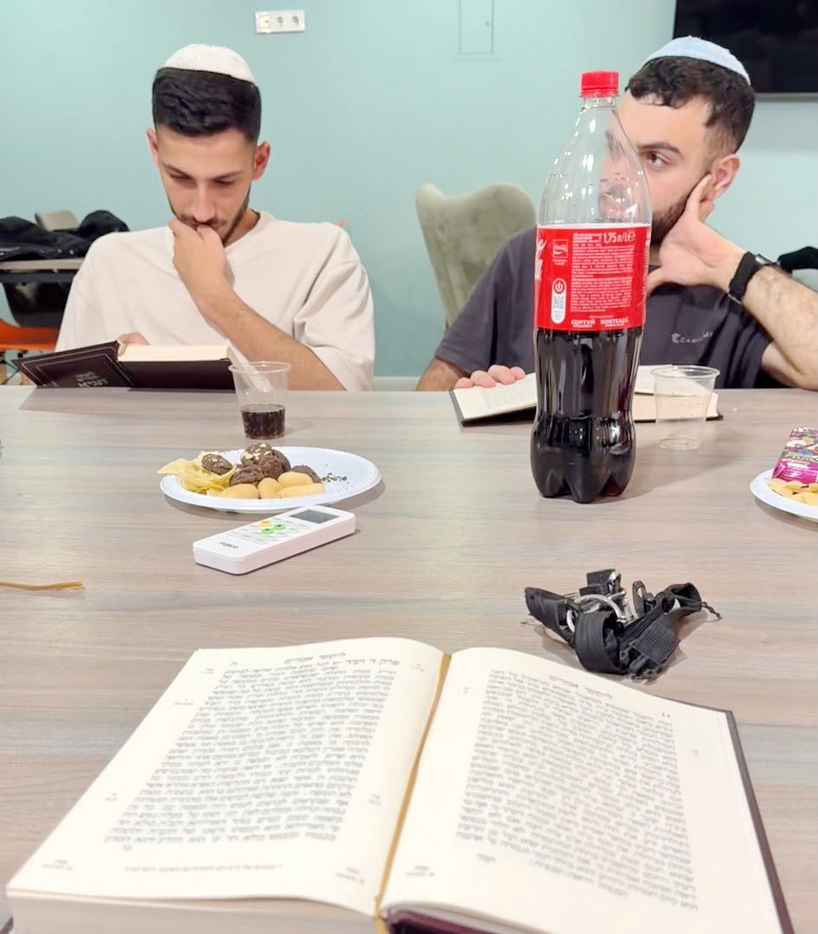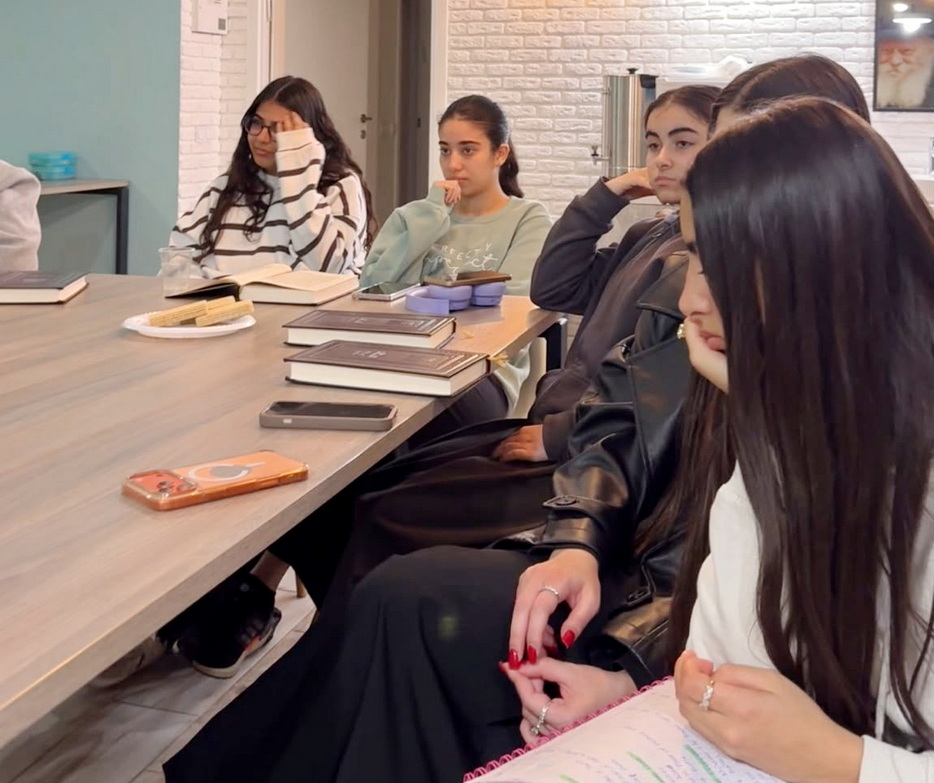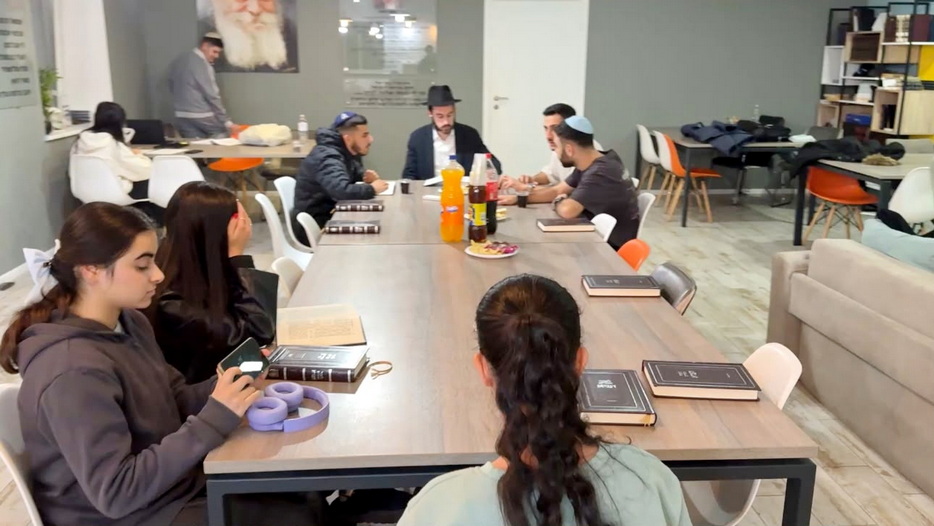




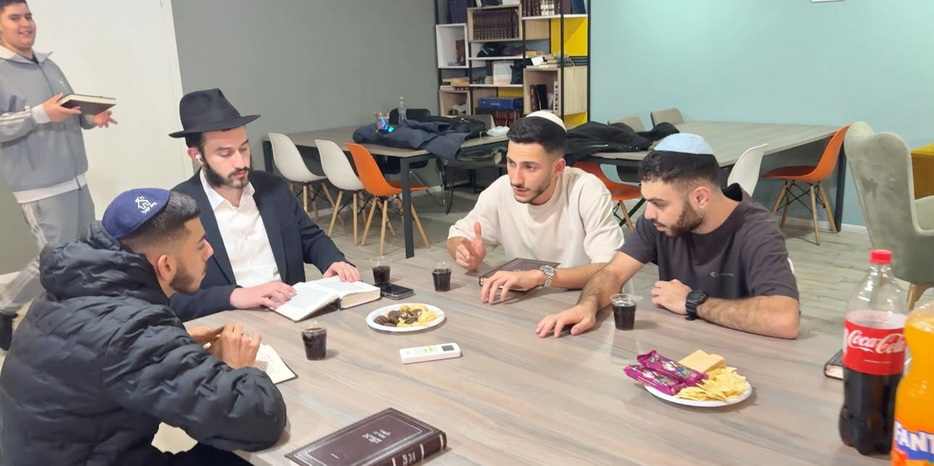
At the project of the Jewish Community of Dnipro, “Beit Yoel” – a Dnipro Beit Chabad for Israelis living and studying in the city – another lesson by Rabbi Yosef Nachshon took place within the cycle of classes on the book of “Tanya.” This time, the participants did not so much study the text of the foundational work of Chabad Chassidus directly as discuss practical questions connected with its teaching, above all – love, relationships between a man and a woman, and establishing a Jewish family.
At the beginning of the gathering, the participants briefly returned to the text of the fourth perek of the “Tanya,” continuing the discussion about the role of the mind and the emotions in a person’s life. Rabbi Nachshon explained that the mind is necessary for making right decisions, yet a person’s own notions do not always enable them to assess a situation objectively. That is precisely why a Jew should rely on the wisdom of the Torah, through which the Almighty gives a person the ability to determine how best to act. At the same time, the emotions also hold enormous significance, for spiritual life is not limited to rational understanding alone.
The main part of the class was dedicated to questions of finding a life partner, love, and building relationships. The participants spoke about shidduchim – introductions that presuppose serious intentions and the striving to establish a family. Yosef Nachshon emphasized that the choice of a future wife must be approached responsibly: it is not at all the same as an accidental acquaintance in a bar. When a person seeks not a fleeting infatuation but a life partner, it is important for them to understand which values they will share, on what they will build their relationship, and how they envision their shared future.
Special attention was given to the question of how true love arises and is strengthened. The participants discussed the idea that strong relationships do not arise by themselves and cannot be based exclusively on feelings. Love requires constant effort: the more a person invests in the relationship, shows care, gives attention, and strives to make the other person happy, the deeper their bond becomes.
This theme is directly connected with Chassidic teaching as well, since the relationship between a husband and wife serves as one of the analogies that help one understand a person’s relationship with the Almighty. Just as love between spouses is revealed through care and concrete deeds, so too a Jew’s connection with the Creator is manifested not only in thoughts and feelings but also in the study of Torah, the fulfillment of mitzvos, and daily service. Thus, the discussion of questions of family life became a practical continuation of the study of the “Tanya” and enabled the participants to see how the ideas of Chassidus are connected with their own life decisions.
“We want the study of the ‘Tanya’ to help our participants not only understand Chassidic teaching more deeply but also find in it answers to the most important questions of their lives,” noted Rabbi Yaakov Dorfman, director of the “Beit Yoel” project. “Establishing a Jewish family, choosing a life partner, and the ability to love and care for another person require a serious attitude and great inner work. It is precisely such knowledge and values that we strive to pass on to young Israelis, helping them feel themselves part of the united and cohesive Jewish Community of Dnipro under the leadership of Chief Rabbi Shmuel Kaminezki.”