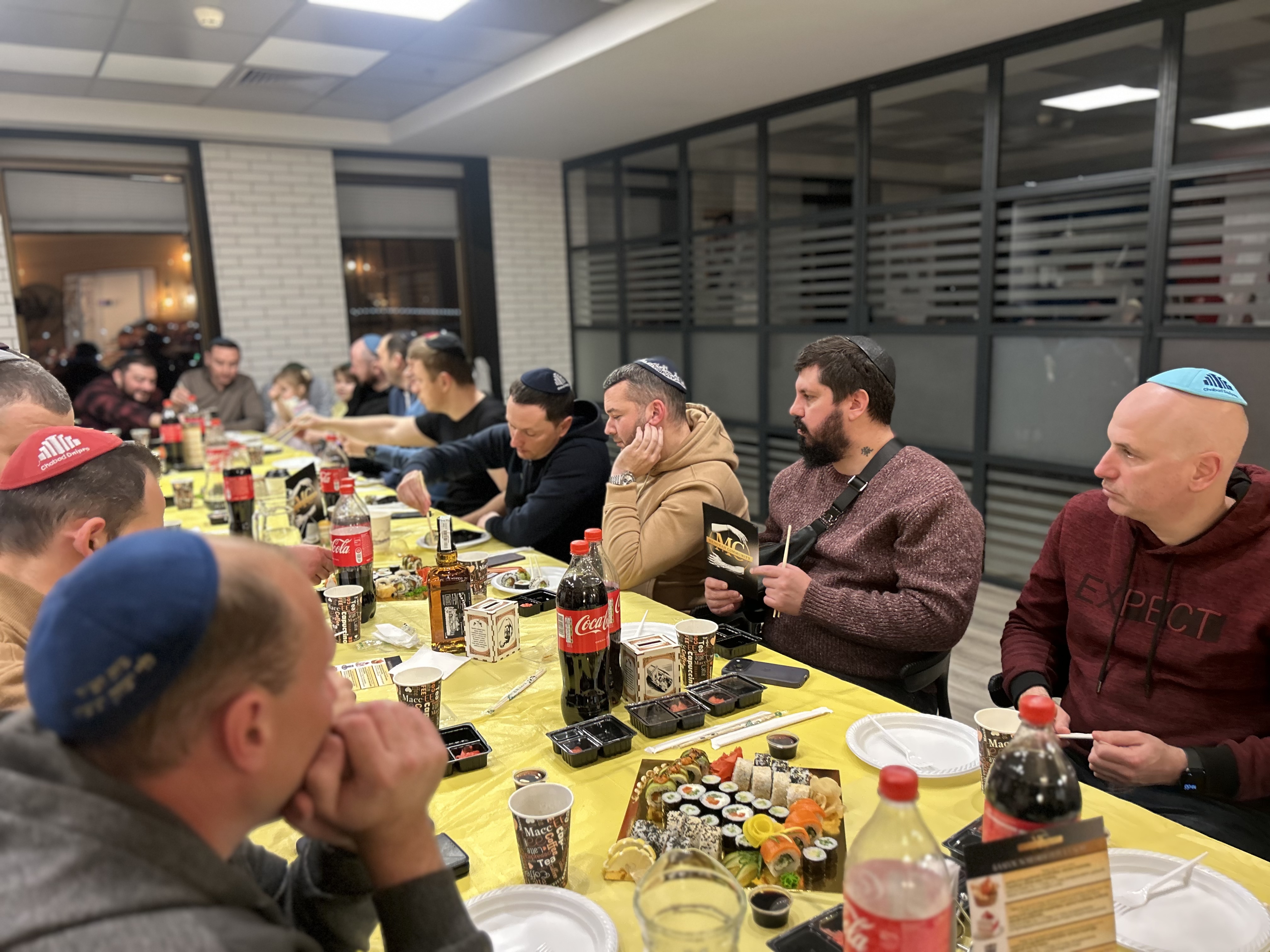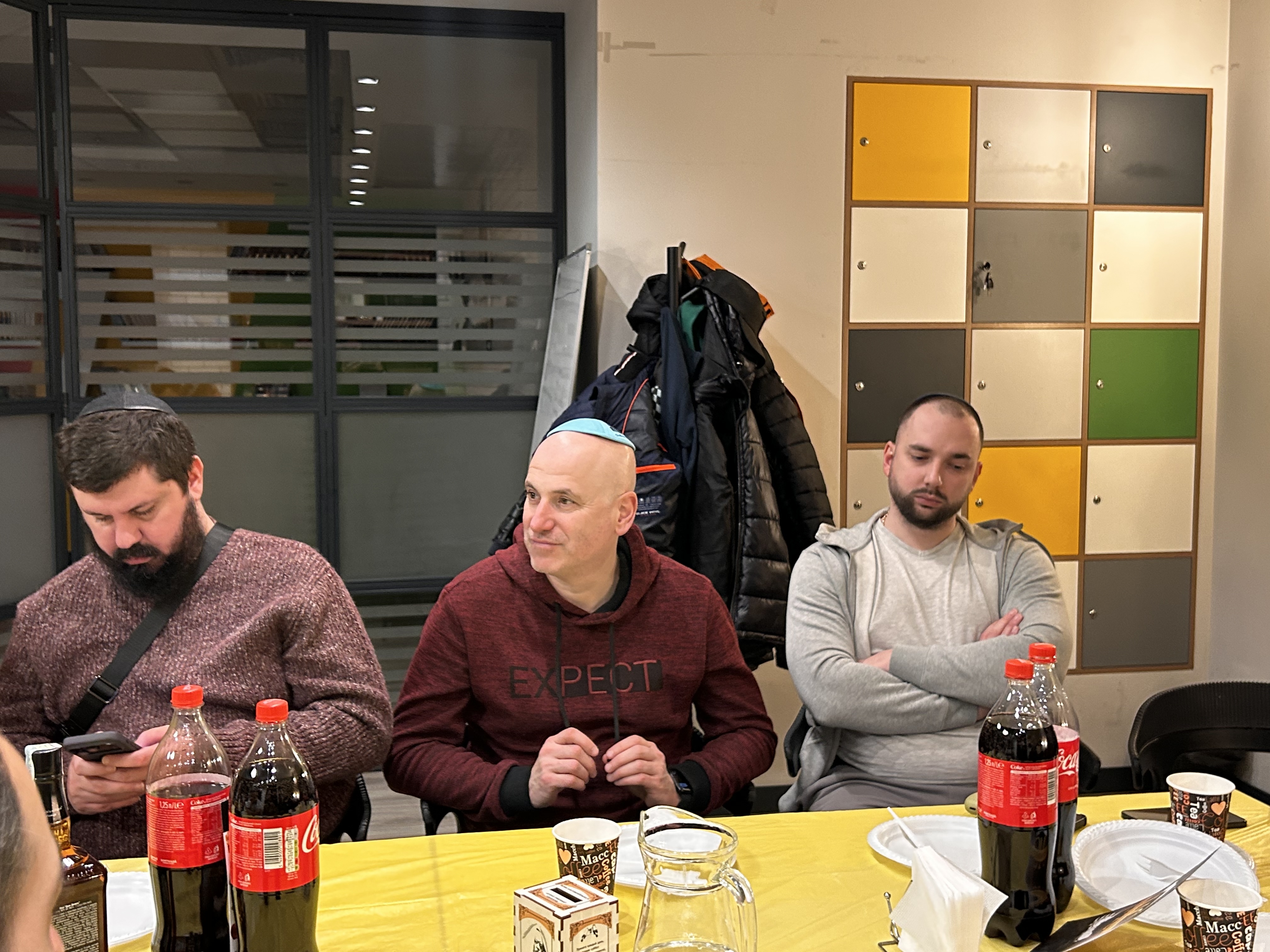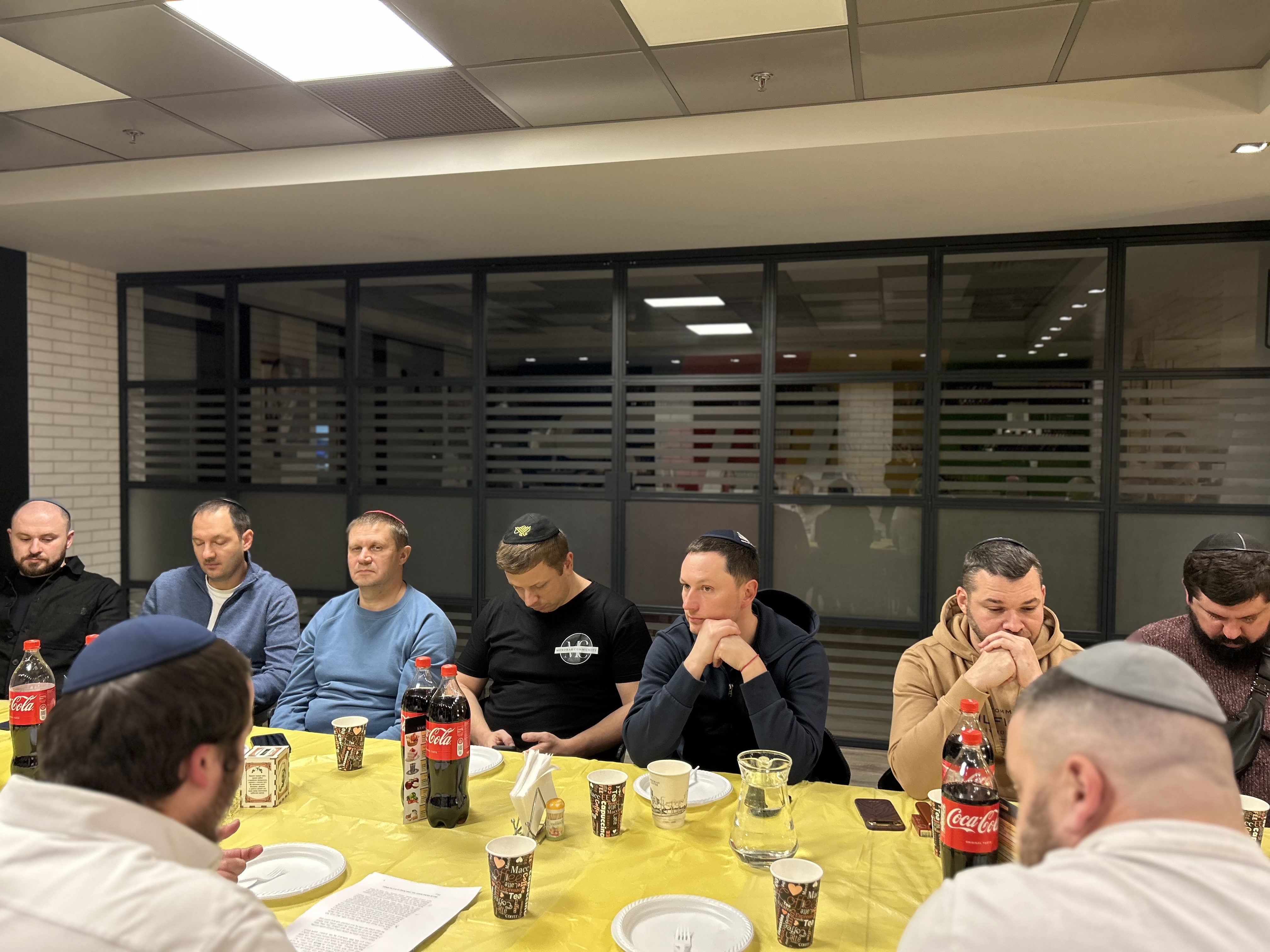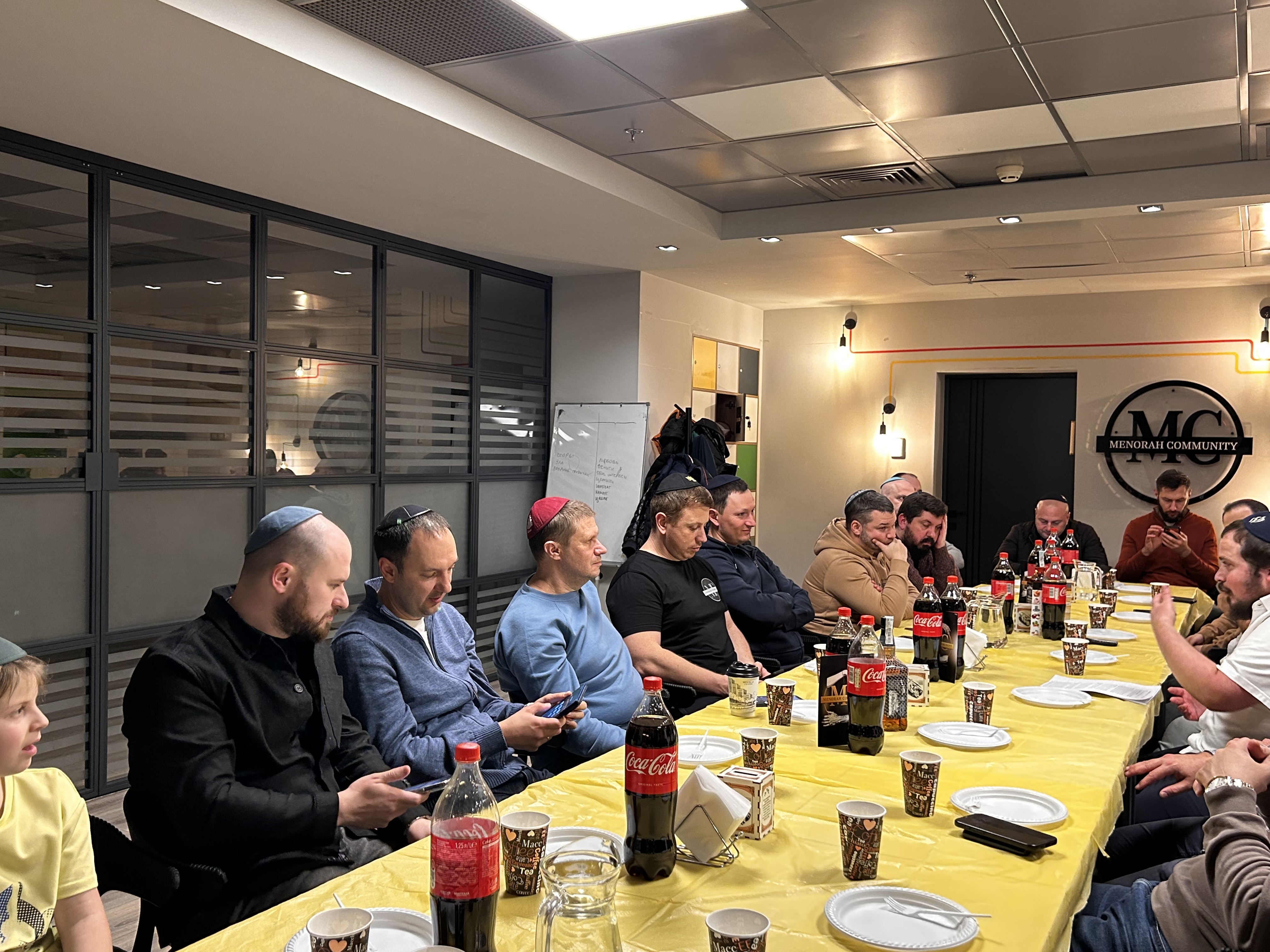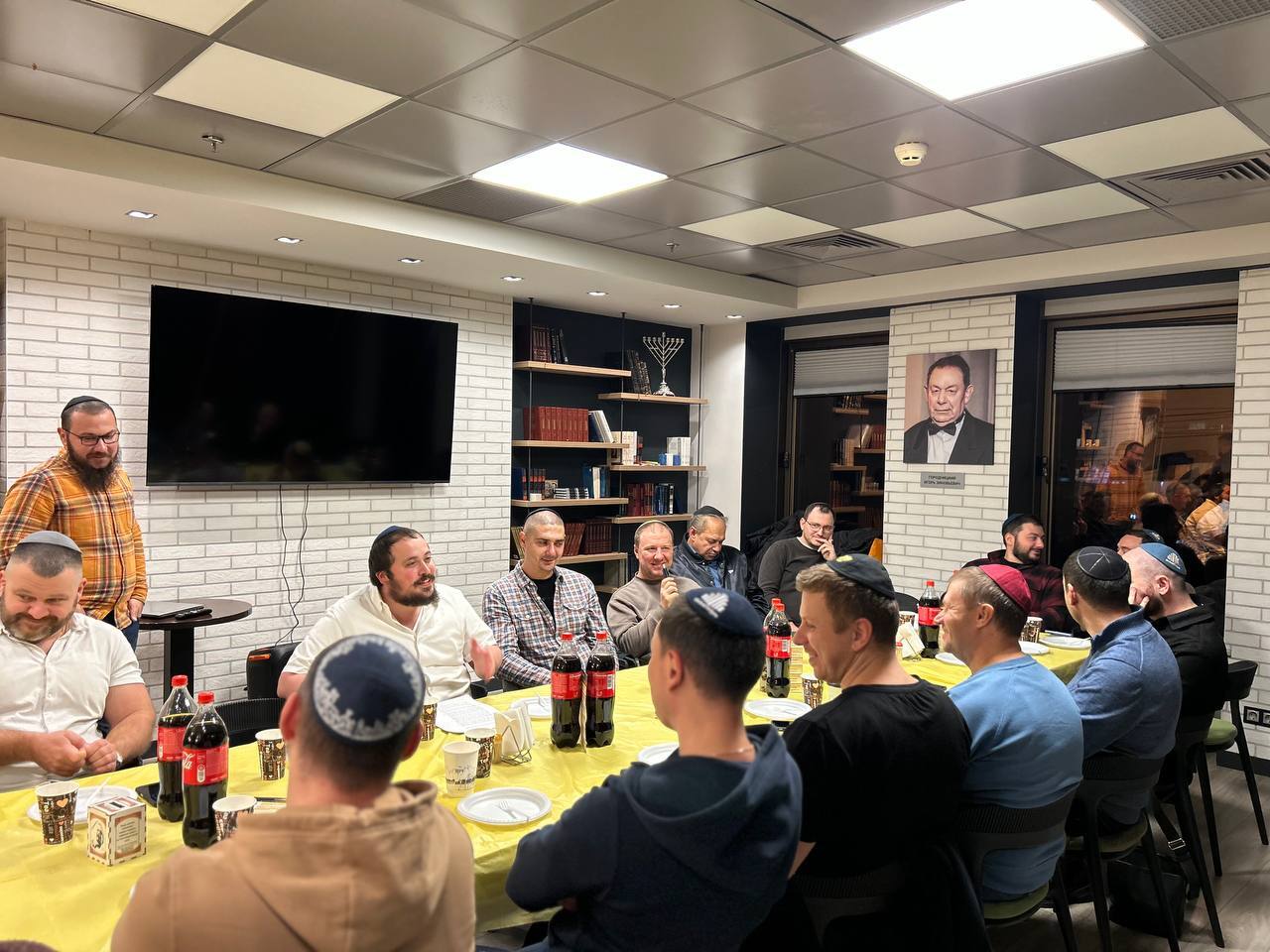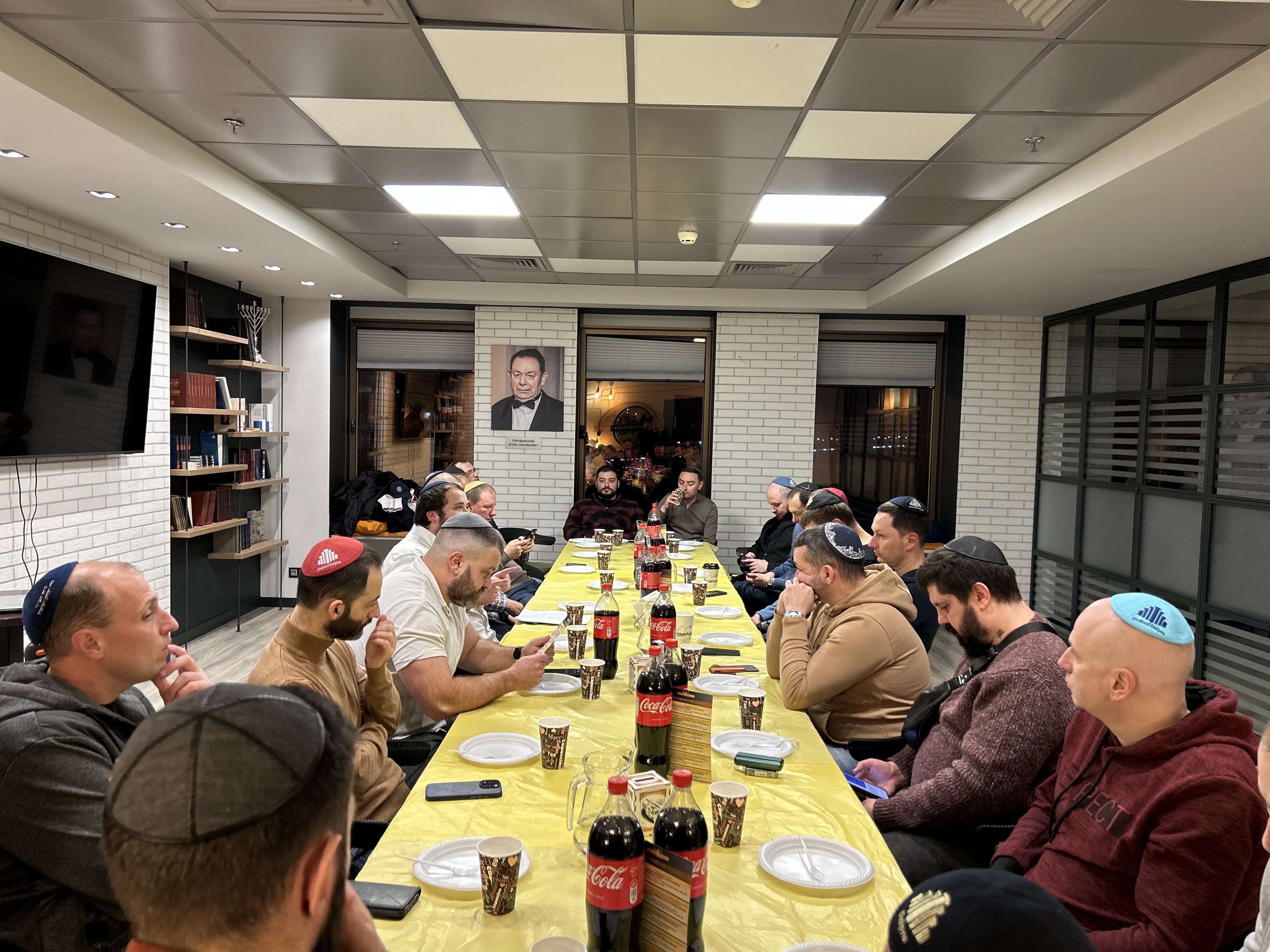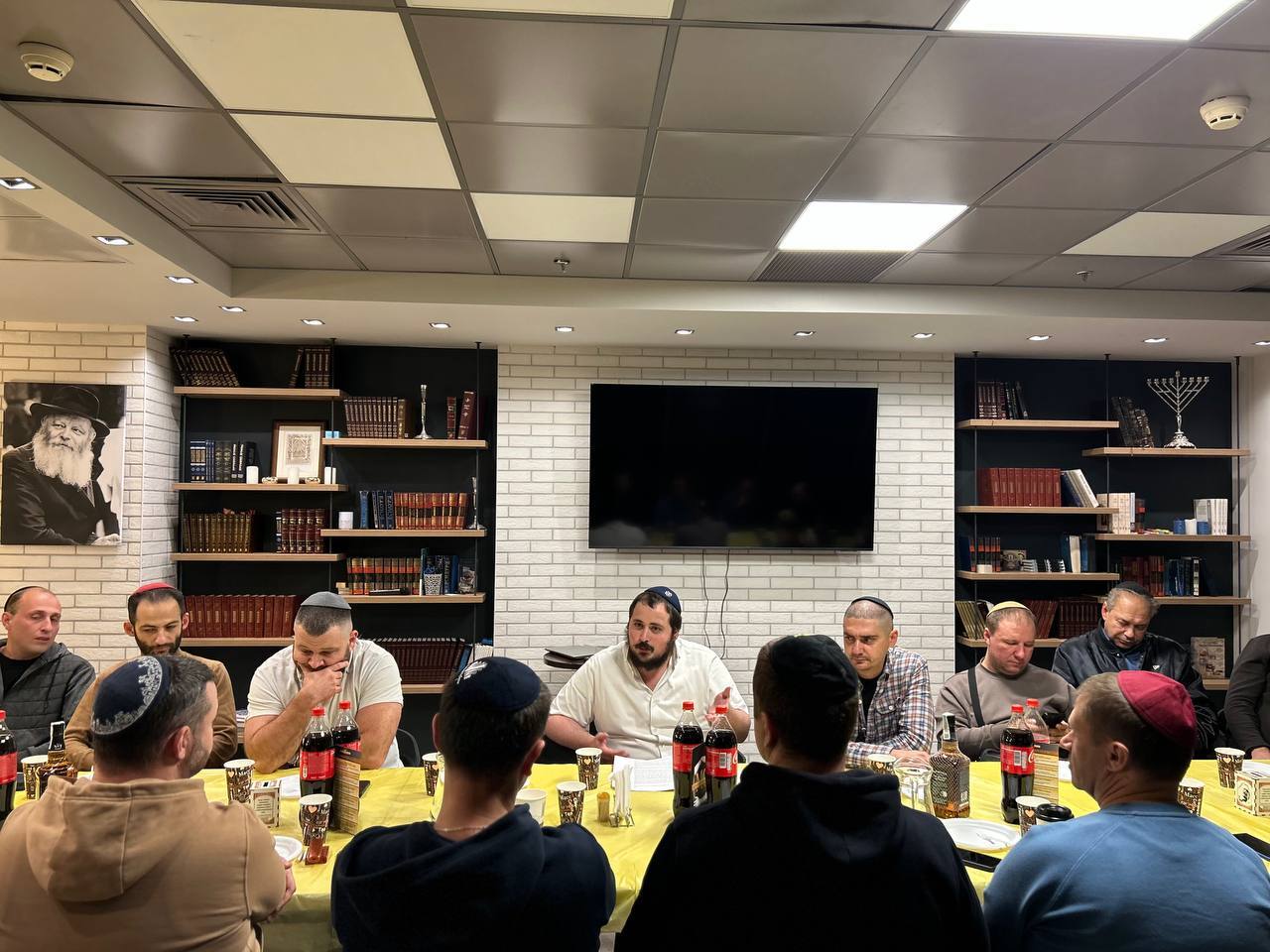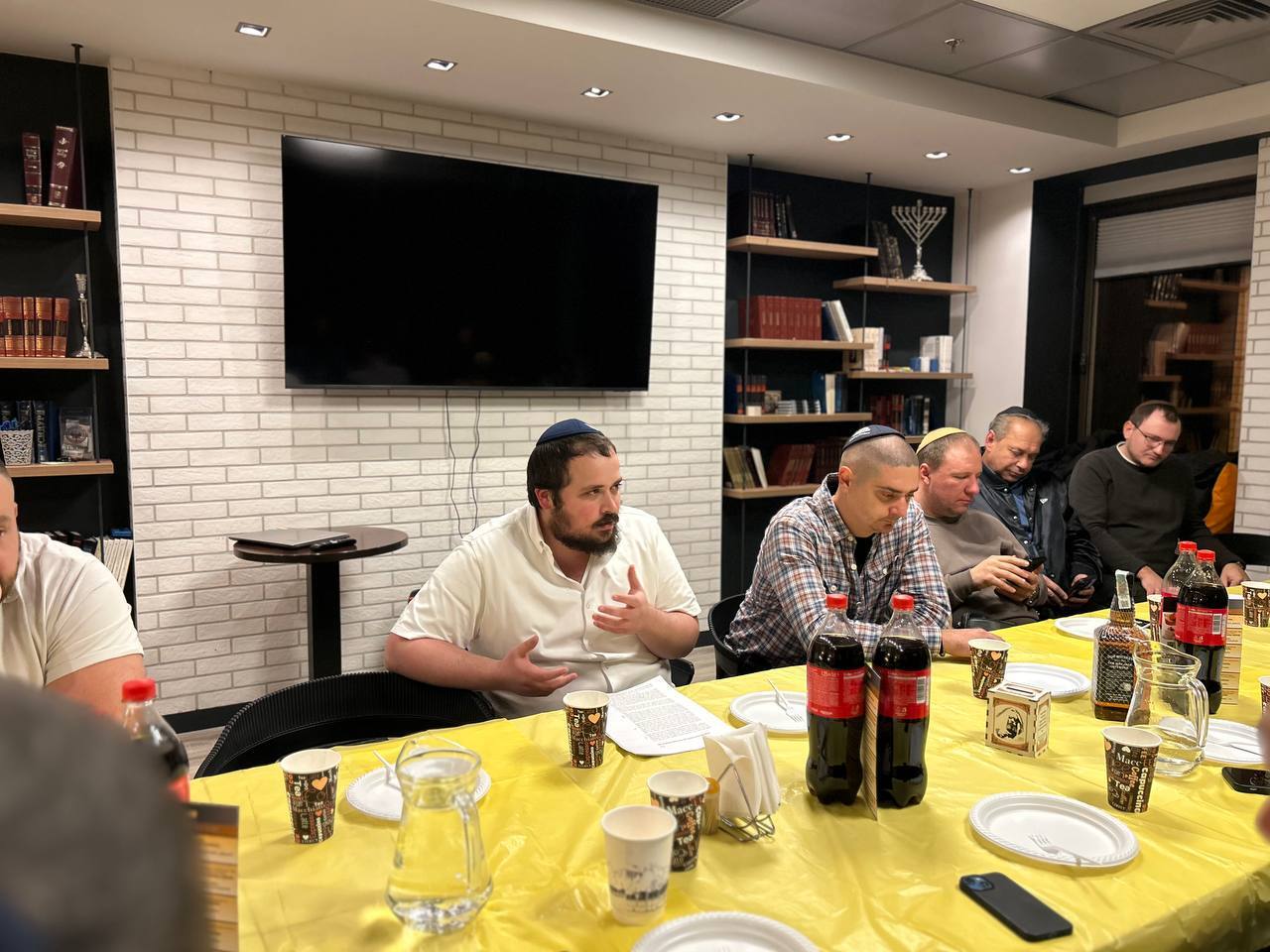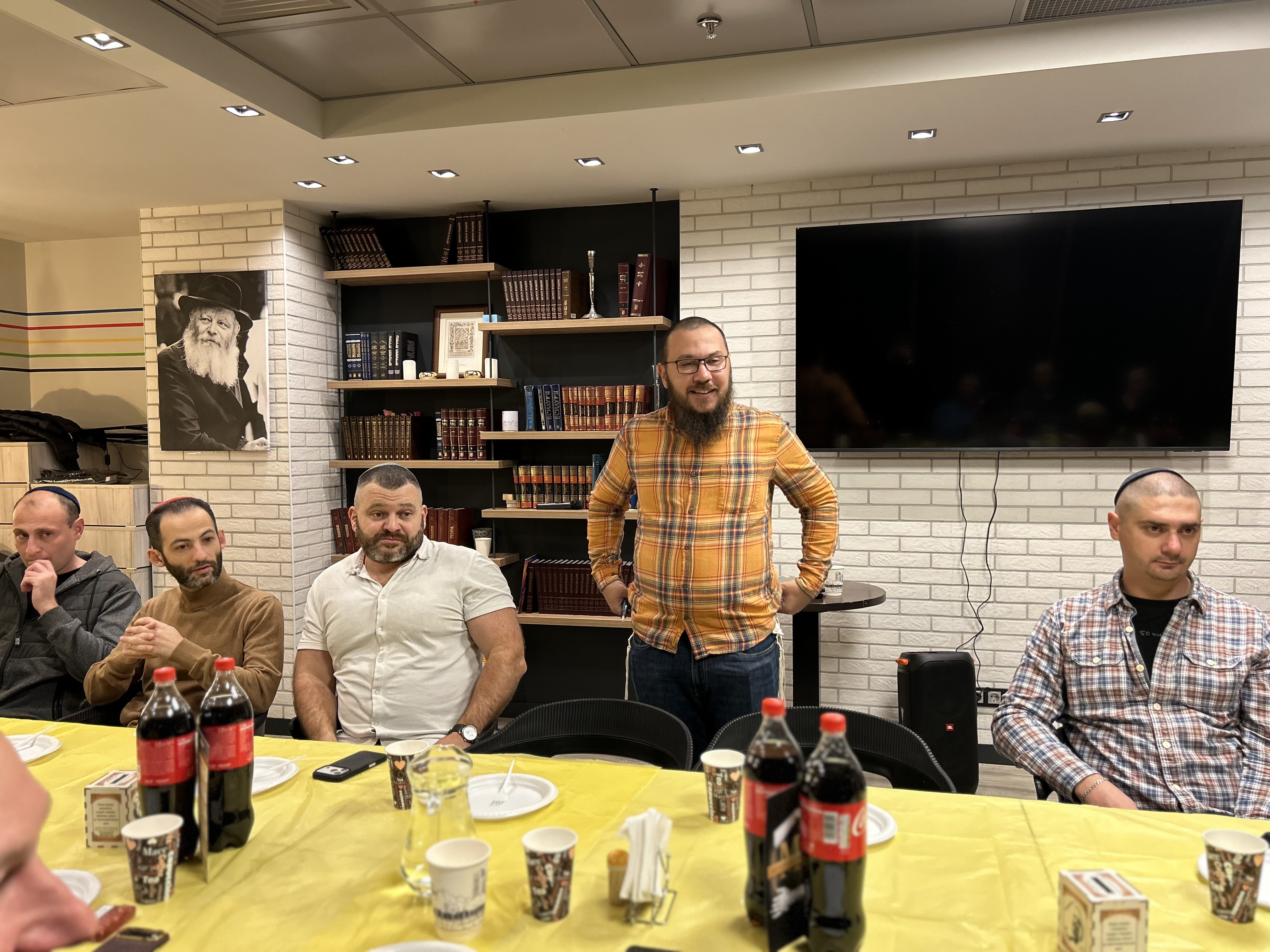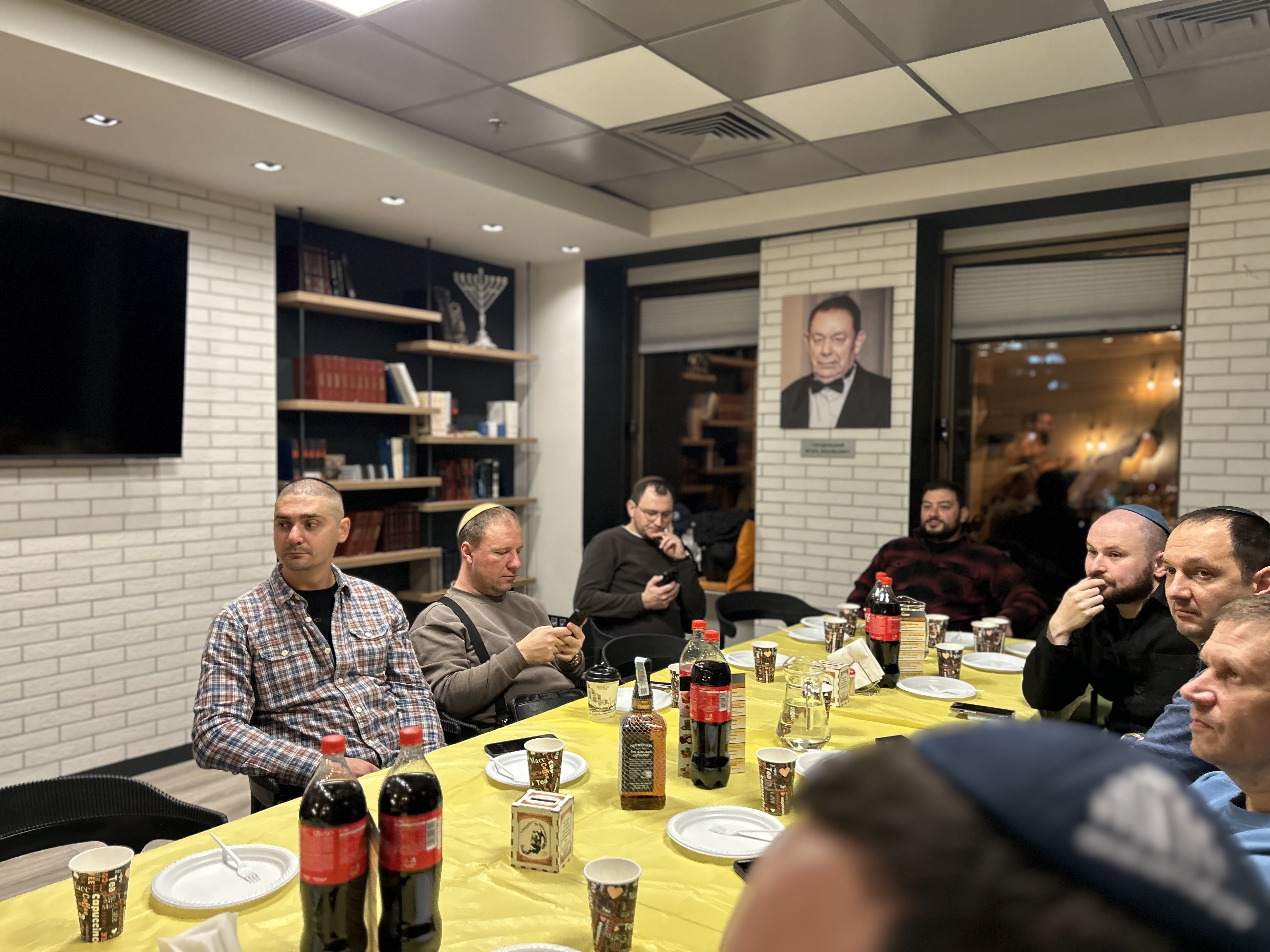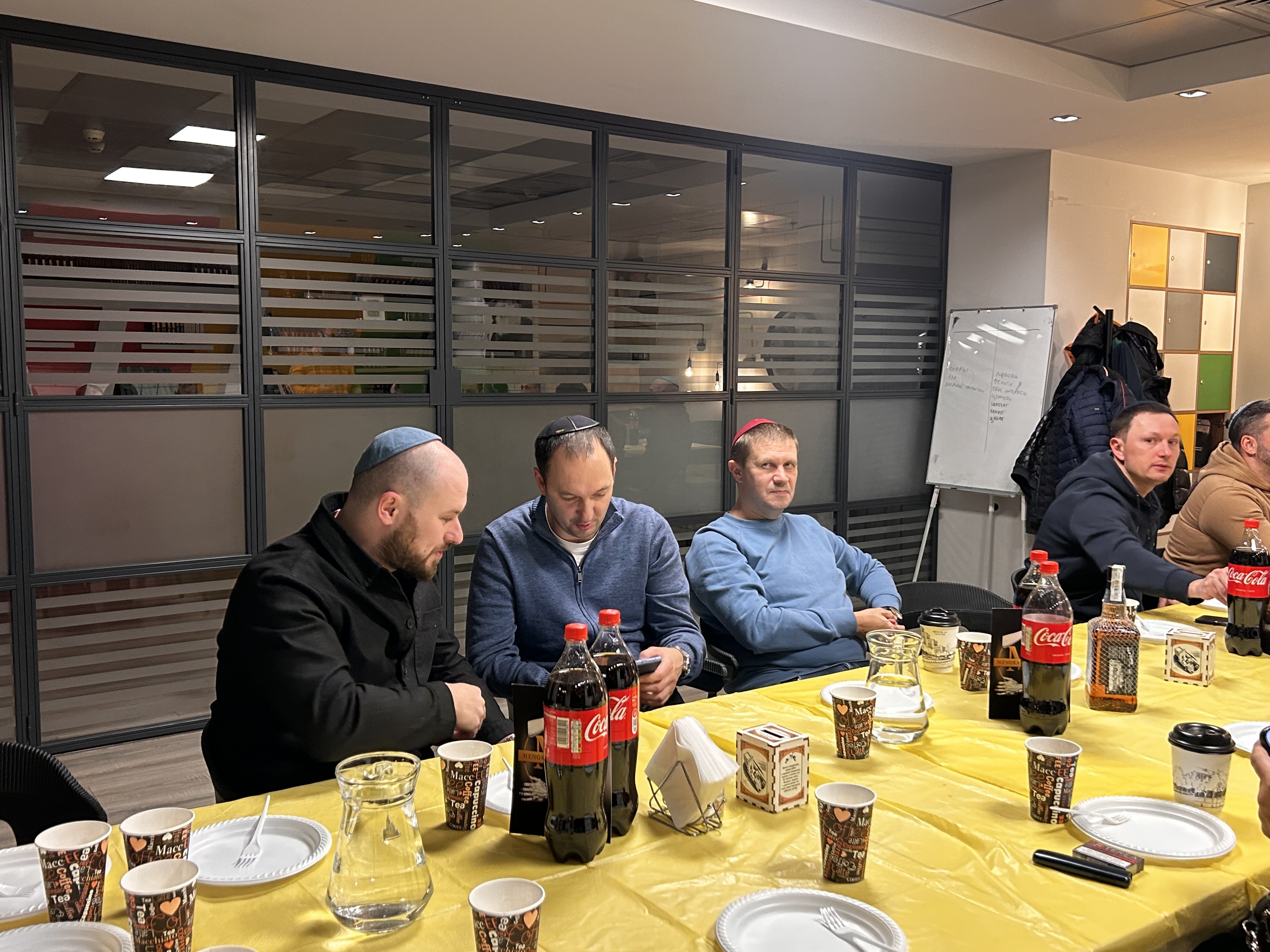




The “Menorah Community” youth project—part of the Jewish Community of Dnipro and flourishing thanks to the efforts of the Zislin family—recently hosted a Torah lesson for men. The session focused on the weekly Torah portion, “Toldot,” and explored why individuals are sometimes willing to sacrifice something truly valuable to satisfy fleeting desires, without considering the consequences of their choices.
The lesson was led by Rabbi Reuven Kaminezki, who drew upon the story of Esau, who sold his birthright to his younger brother, Jacob, in exchange for a bowl of food. Having returned from the fields exhausted and hungry, Esau was offered a meal by Jacob—but only in return for his birthright. For Esau, the urge to sate his immediate hunger outweighed the immense significance of his own future. Thus, a single, seemingly minor decision led to a loss that could never be recovered.
This narrative served as a springboard for discussing a challenge that people face throughout their lives: why do things that provide instant pleasure or relief sometimes seem more important than long-term goals? How can one learn to distinguish between genuine needs and passing whims? And what can help a person resist the temptation of an immediate reward when it requires sacrificing something far more substantial? The example of Esau serves as a reminder that not all losses can be undone; therefore, it is crucial to align one’s decisions with the authentic values defined by the Torah and the teachings of Hasidism. After all, remaining true to these values requires the ability to look beyond the present moment and to remain mindful of one’s responsibility for one’s own future.
“The story of Esau shows how easily a person can cast aside what is most valuable if they allow fleeting desires to dictate their decisions,” noted Levi Zislin, head of the ‘Menorah Community’ project. “In our classes, we strive to help young people learn to foresee the consequences of their choices, set the right priorities, and understand that a person’s true wealth lies not in the immediate gratification of desires, but in faithfulness to the Torah, Jewish values, and one’s own spiritual purpose. We are grateful for the opportunity to carry out this important work within the unified and cohesive Jewish community of Dnipro, under the leadership of Chief Rabbi Shmuel Kaminezki.”