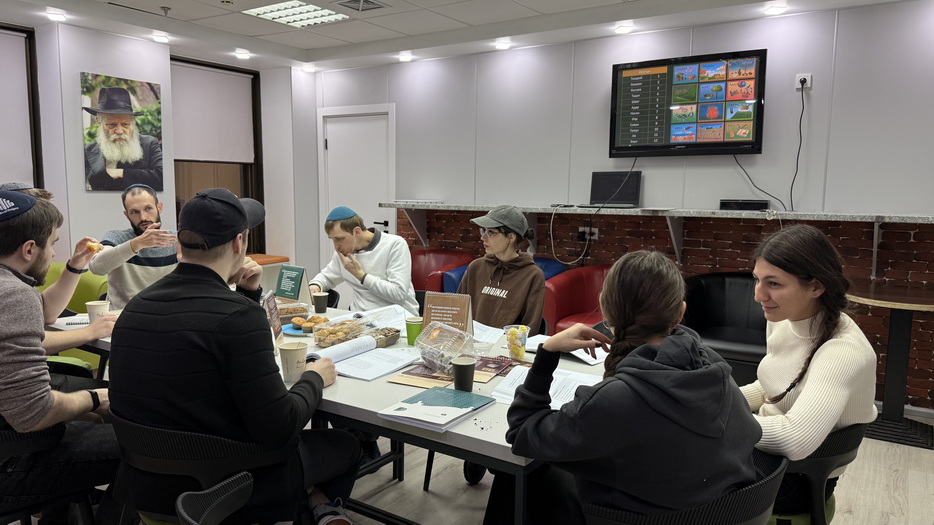





Another Sunday gathering of the youth educational project of the Jewish Community of Dnipro, “DJCY-STL-STARS Dnipro,” was dedicated to the approaching month of Kislev, its special significance in Jewish tradition, and the structure of the Jewish calendar. The program combined a creative activity, an introduction to the most important dates of the month, and a lesson by Michael Muzykin, at which the participants learned how the Jewish reckoning of time is structured, why it differs from the familiar civil calendar, and what significance it holds for everyday Jewish life.
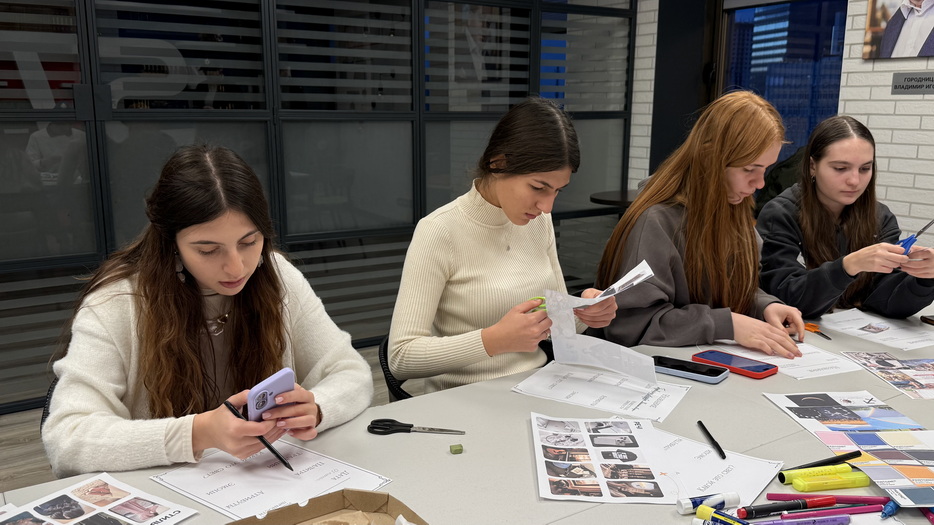
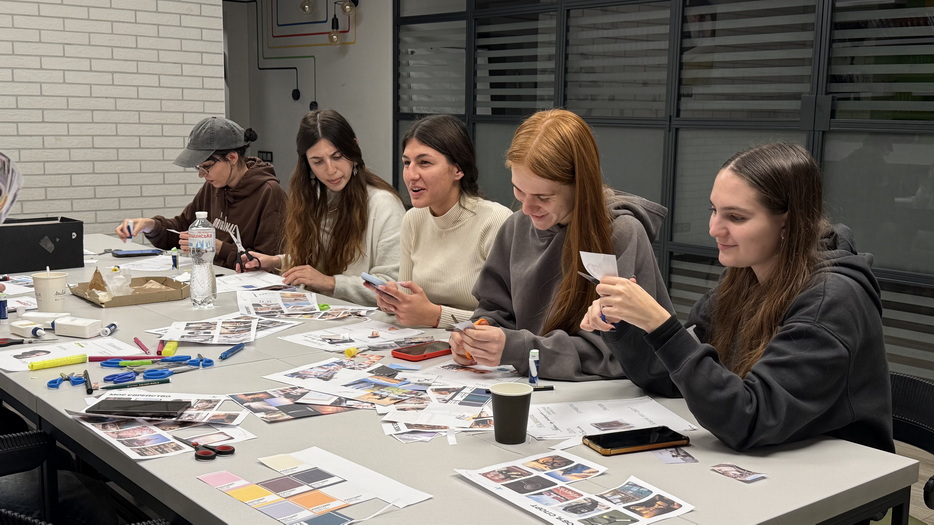
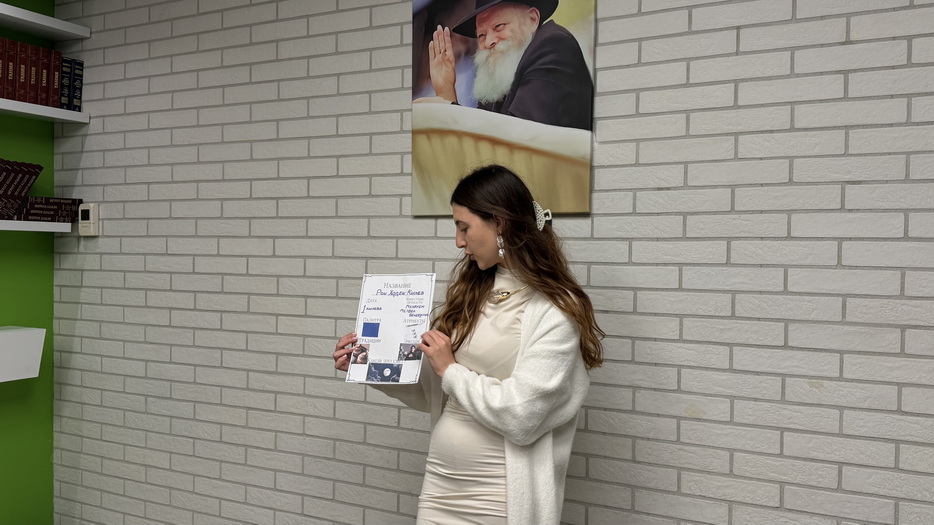
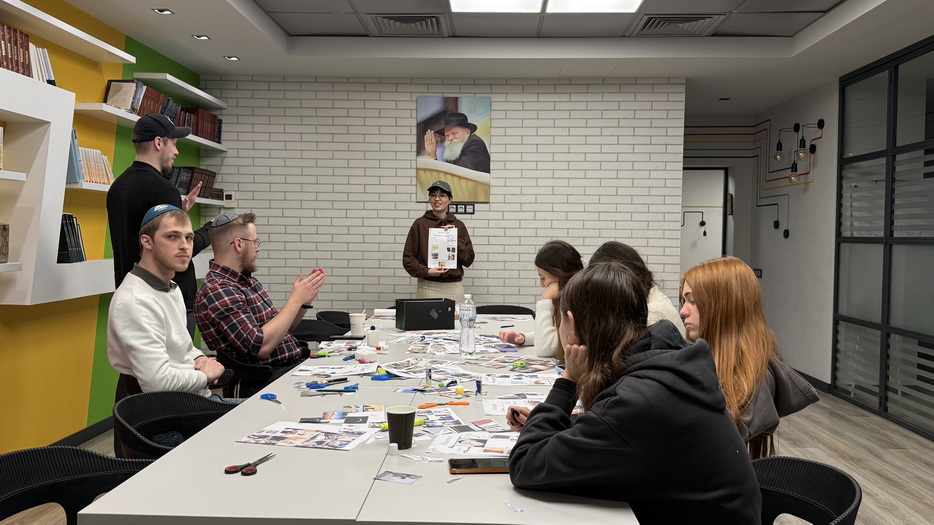
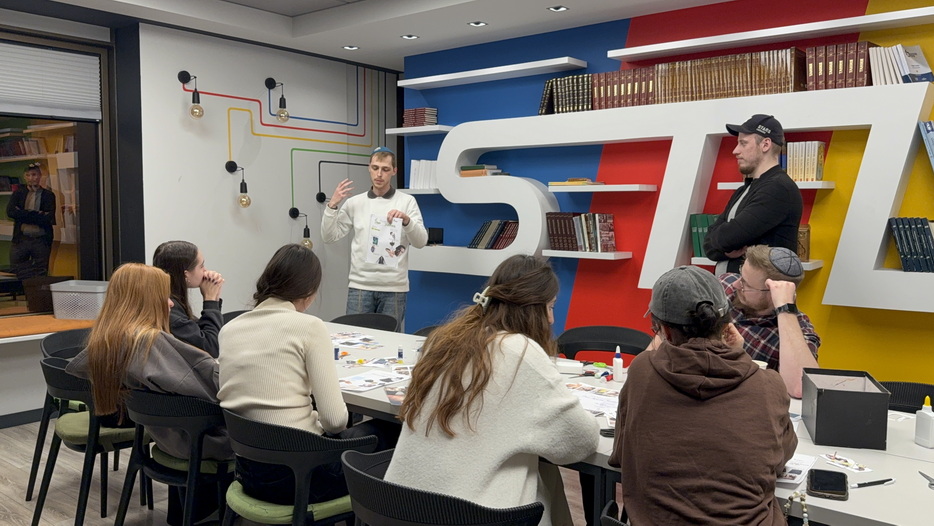
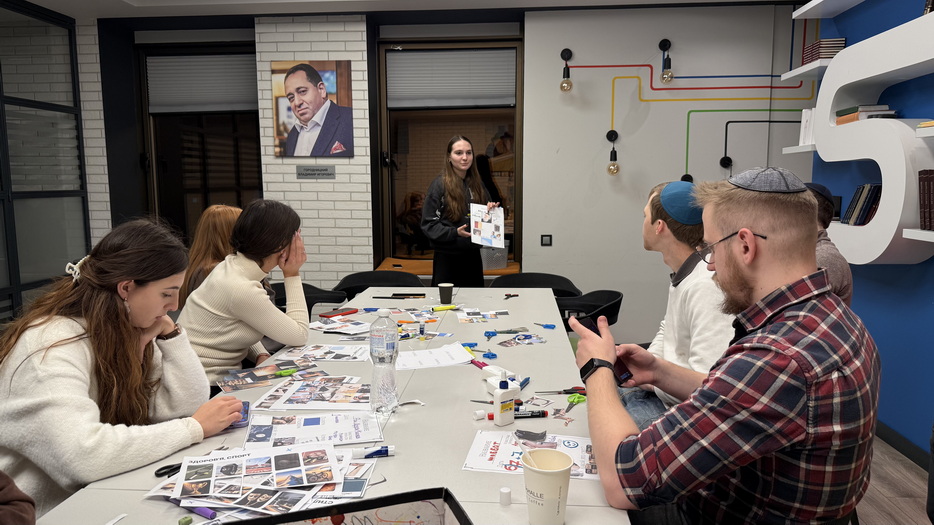
The gathering began with a creative activity prepared and conducted by Eliyahu Ivakhnenko. The participants became acquainted with the important dates of the coming month – Rosh Chodesh, the 1st, 14th, and 19th of Kislev, Chanukah, and other notable days of Jewish history and Chassidic tradition. Each student created their own poster-collage, using images, symbols, and colors connected with the chosen event, and then presented their work and spoke about its significance. Thus, the creative activity became a way not only to become acquainted with the events of the month but also to reflect on the meaning of its special dates.
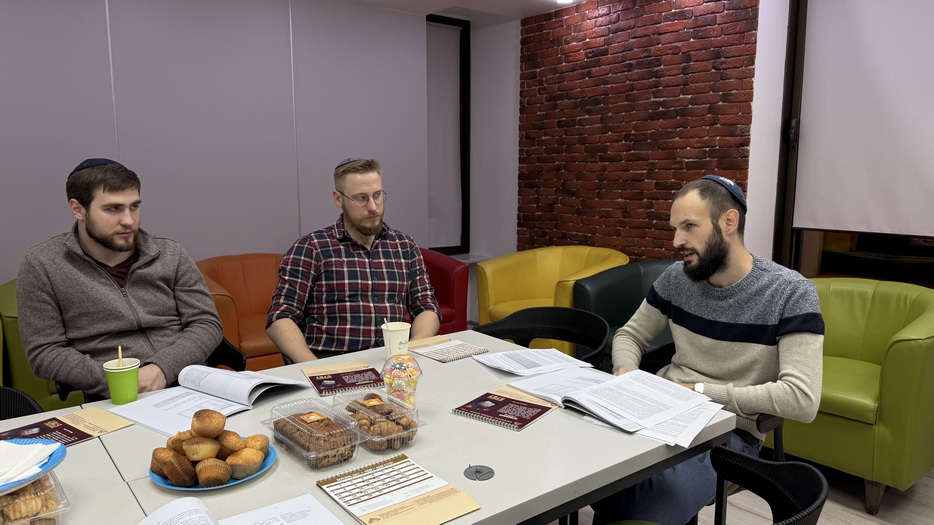
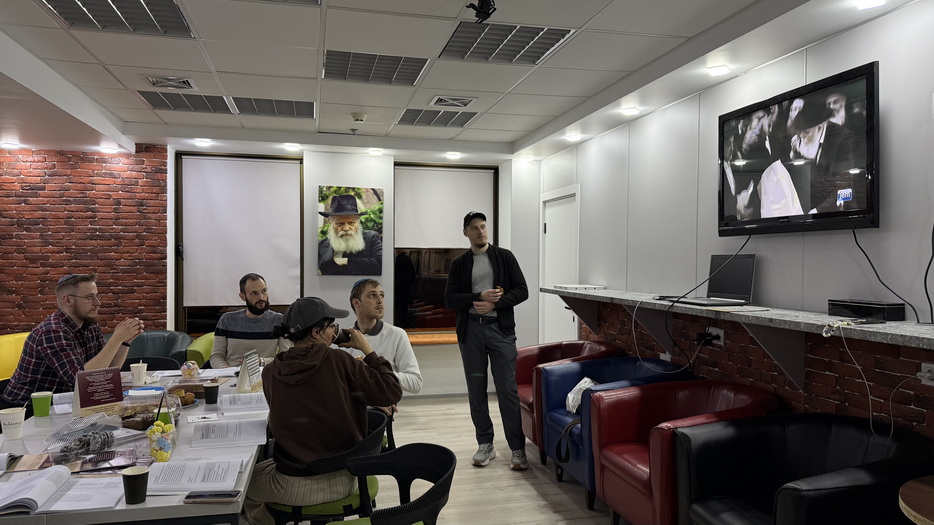
Then followed a lesson by Michael Muzykin dedicated to the Jewish calendar and its features. The class began with the viewing of a thematic video of the leader of our generation, the Seventh Lubavitcher Rebbe Menachem Mendel Schneerson, after which the participants moved on to studying the principles of the Jewish reckoning of time.
One of the main themes of the lesson was the combination of the lunar and solar cycles in the Jewish calendar. The participants learned why the Jewish months are connected with the phases of the Moon, yet at the same time the holidays must preserve their place in specific seasons of the year. Special attention was given to the system of leap years, when seven times within a nineteen-year cycle an additional month is added to the calendar. It is precisely thanks to this that Pesach, the holiday of the Exodus from Egypt, always falls in the spring, as the Torah prescribes.
No less interesting a part of the class was the introduction to the history of the formation of the Jewish calendar. The students learned about the role of the Sanhedrin, which in ancient times established the beginning of the new month on the basis of testimony about the appearance of the new Moon, and about the subsequent transition to a fixed calculated calendar. This helped the participants understand how the tradition of determining time, connected with the observation of the heavenly bodies, turned into a coherent system that the Jewish people have used for many generations.
Separate attention was given to the practical significance of the Jewish calendar. The participants discussed why a Jew’s birthday is determined specifically by the Jewish date, what the celebration of many yom tovs over two days outside the Land of Israel is connected with, and what spiritual significance the monthly sanctification of the Moon – Kiddush Levanah – holds. Thus, the complex calendrical calculations appeared not as abstract theory but as an important part of the Jewish way of life, which determines the time of fulfilling mitzvos, holidays, and commemorative dates.
“The Jewish calendar is not merely a way of counting days, months, and years, but a special system that connects our everyday life with the history of the people, the fulfillment of mitzvos, and the spiritual meaning of time. And it is very important that young people understand this connection and are able to use the calendar in their own lives,” noted Chaya Maltseva, director of the “DJCY-STL-STARS Dnipro” project. “It is especially symbolic that such a class took place on the eve of the beginning of the month of Kislev, which occupies a special place in Chassidic tradition and reminds us of the power of Jewish light, capable of overcoming darkness. We are glad that our students have the opportunity not only to study traditions but also to discover their profound meaning, and we are sincerely grateful for this opportunity to the united and cohesive Jewish Community of Dnipro under the leadership of Chief Rabbi Shmuel Kaminezki.”