



As we complete the preparations for Passover, this evening we need to conduct the search for leaven – “Bedikat Chametz.”
By this evening, every Jewish home must be thoroughly cleaned of leaven in any form – not only bread, beer, and pasta, but even crumbs from them and anything that may have come into contact with chametz (dishes, tablecloths). All of this must be discarded or disposed of in another way. (Anything containing chametz or having acquired its status that is intended for use after Passover must be sold in advance according to the appropriate formula.)
Despite this, in the evening, before the onset of Passover, a special ritual is performed – ‘Bedikat Chametz,’ which is obligatory for everyone and is itself an important commandment and a significant step in the preparations for Passover.
This year, the ritual will take place on Tuesday starting at 19:40 (Dnipro).
Before the ritual, the small amount of chametz that is intended to be eaten during the night and in the morning, before the time of complete prohibition, is packed away. Care is taken to ensure that neither children nor pets find and scatter the crumbs – otherwise, the search will have to be conducted again.
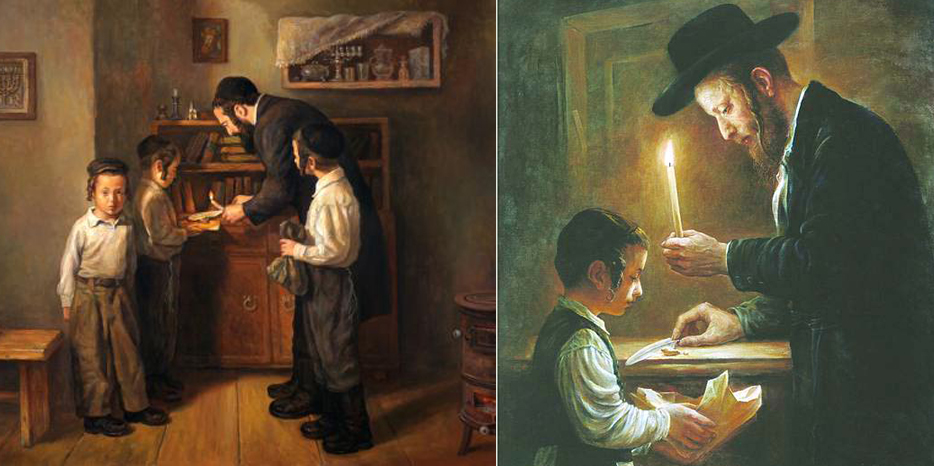
All household members participate in the search, including children – each is provided with a special set consisting of a candle, a wooden spoon, a feather, and a bag (preferably paper). Any chametz found is swept into the spoon with the feather and placed in the bag, while the search is conducted by candlelight.
The search must begin with the onset of night. Before starting ‘Bedikat Chametz,’ the head of the household recites a blessing:
‘Blessed are You… who has sanctified us with His commandments and commanded us to destroy chametz.’ (No separate blessing for performing ‘Bedikat Chametz’ is recited, as this procedure is not an end in itself, but merely the initial stage of fulfilling the Torah commandment to eliminate all chametz from the house before Passover – ‘Biur Chametz’).
Transliteration
Bo-ruch A-toh Ado-noi E-lo-hei-nu Me-lech Ho-olom A-sher Ki-de-sha-nu Be-mitz-vo-sov Ve-tzi-vo-nu Al Bee-ur Cho-metz.
Translation:
Blessed are You, L-rd our G‑d, King of the universe, who has sanctified us by His commandments, and has commanded us concerning the removal of chametz.
(The text can also be found in the blue Siddur on page 406.)
After the blessing is recited, it is forbidden to speak of anything whatsoever until the beginning of the bedikat chametz, even anything related to the bedikat chametz. Furthermore, throughout the entire search, one should not speak of anything other than the search itself until the final formula is recited.
It is recommended to begin the bedikat chametz solemnly, involving all household members and assigning each one to check a specific area of the house. To do this, gather the entire family so that everyone hears the blessing and responds “amen” to it, and then, without saying a word, begin checking, each one their own area.
The bedikat chametz should begin from a place as close as possible to where the blessing is being recited.
To prevent (God forbid) the chametz from being found, which would result in the blessing being recited in vain, ten pieces of chametz are prepared in advance, wrapped in paper to prevent crumbs, and placed around the house to be discovered during the ritual. There are several explanations for this custom. First, searching for these pieces of chametz maintains the inspector’s interest and prevents him from slackening his concentration.
Second, the presence of chametz in the house reminds him of the necessity of performing “bitul chametz” the following day, when the chametz is burned. Furthermore, from a Kabbalistic perspective, this custom has various explanations. According to one, these ten pieces of chametz represent ten forces of impurity that the Almighty will destroy in the future. It’s clear that the chametz intended for “bedikat chametz” should be laid out in advance, not by the person performing the “bedikat chametz,” but by someone in the household, so that the house inspection doesn’t turn into a search for just those ten pieces.
The inspection must be thorough and complete. To facilitate the process, on the afternoon of the 13 of Nissan/March 31, the house is thoroughly swept, especially under beds and other furniture, where there is a high risk of finding stray chametz. Crevices, holes, and corners of rooms are carefully checked. In narrow spaces or large openings, it’s sufficient to inspect only as far as the hand can reach. If chametz is visible in such places but impossible to reach, the area is covered (for example, with clay).
Here is a short list of places where you should perform Bdikat Hametz:
Cars (including hiding places, floors, and seats);
Aquariums;
First aid kits;
Bars;
Sideboards and kitchen cabinets;
Drawers;
High chairs;
Garages;
Cribs and playpens;
Playpens;
Lunch boxes;
Cookie and candy containers;
Toys and toy cabinets;
Pantries;
Books;
Mini siddurim for Birkat HaMazon (after-meal prayers) – these should be removed for the entire Passover and replaced with clean or new ones;
Bookcases and shelves;
Bread baskets;
Makeup bags;
Purses and handbags;
Porches and verandas;
Workshops and offices;
storage areas for computer disks, CDs, cassettes, etc.;
trash cans;
wall cabinets;
disposable cardboard or plastic dishes;
open shelves;
desks;
cookbooks (clean and put away for the entire Pesach);
candlesticks (clean thoroughly before use during Pesach);
household appliances;
briefcases, bags, cases;
bird cages;
vacuum cleaner dust collectors;
study rooms;
hand carts, wheeled bags;
backpacks;
folds of clothing – especially pockets, cuffs;
dog houses and cat litter boxes;
shopping bags;
toasters (clean and put away by the end of Pesach);
suitcases;
attics;
sheds and garden sheds;
school desks and personal lockers;
school bags;
yachts (only if they are planned to be used during Hol HaMoed; otherwise, it is better to sell them for the entire Passover according to the well-known formula. By “yacht” we mean even a boat with or without oars).
After the search is complete
When the search is complete and all the chametz found is collected in a bag, a feather with a spoon is also placed there – after all, they touched leaven! Then the formula for annulling chametz is pronounced – “Bitul Chametz”.
In the siddurs, this formula is given in Aramaic, but all authorities agree that it should be pronounced in the language that the person knows well. In Ukrainian, it sounds like this:
“All chametz and all leaven that are in my possession, which I have not seen and have not destroyed, may they be annulled and become no one’s, like the dust of the earth.”
The main thing in “Bitul Hametz” is to sincerely and firmly decide that all chametz that remained in the possession, but was not found during “Bdikat Hametz”, is considered non-existent, and its owner completely renounces any rights to it.
After that, the package is tightly tied so that the chametz “does not run away”, and left in a prominent place – so that tomorrow morning they do not forget to burn it.
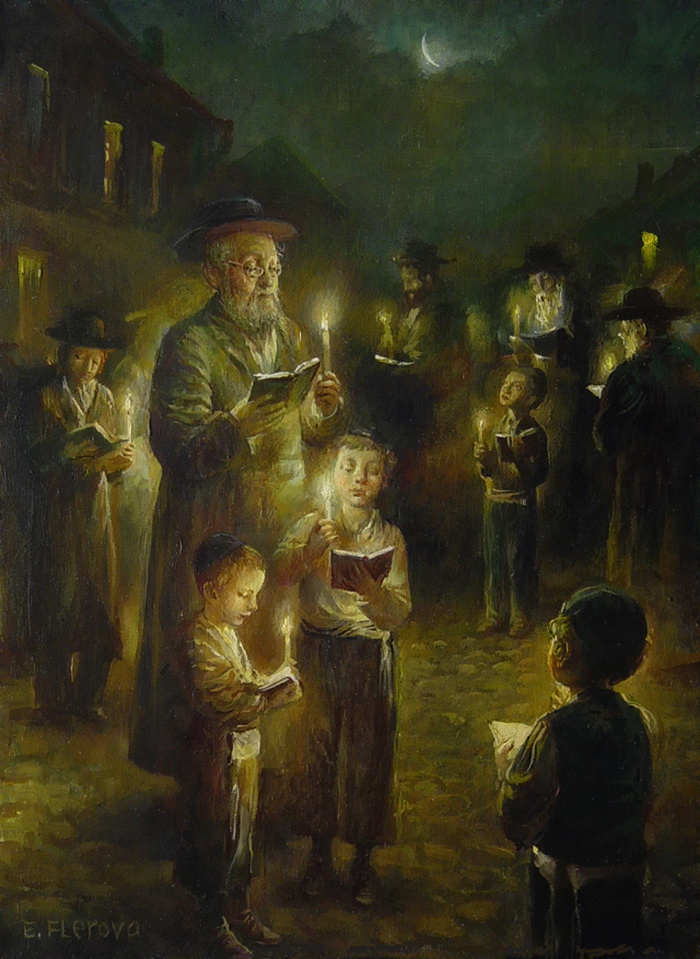
This material uses illustrations from paintings by Elena Florova.
The video channel “Mitzva” has prepared a short game video on this topic: