




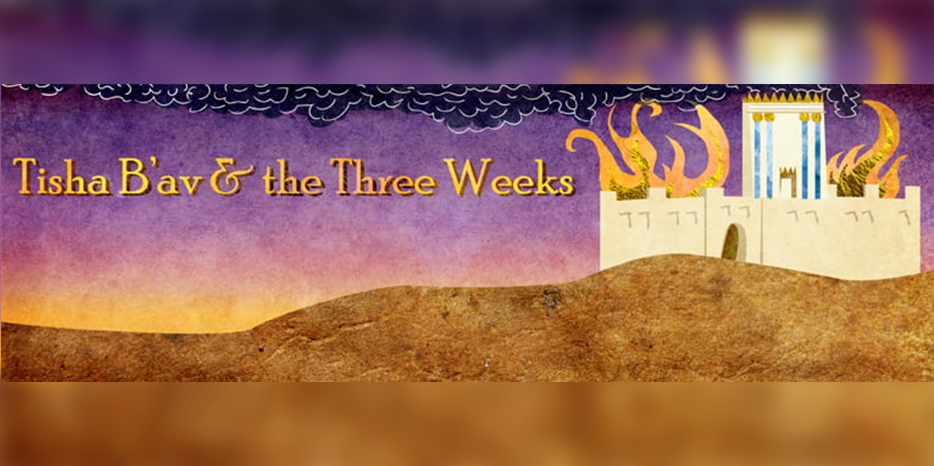
The period from the 17th of Tamuz to the 9th of Av is called “Bein HaMetzarim” (between the straits) and has a number of important characteristics. This year, it begins the and lasts from July 2 through July 23.
In memory of the events connected with the destruction of the First and Second Temples, the Jewish Sages, of blessed memory, established special laws of mourning. Some of them begin to be observed from the 17th of Tamuz, while in the new month of Av, additional regulations and customs come into effect. The severity of the mourning increases as the 9th of Av approaches, when the grief of the Jewish people over the destroyed Jerusalem Temple reaches its climax.
For the benefit of our readers, we are publishing a brief summary of these laws and rules. Should questions arise regarding their application in specific cases, a rabbi should be consulted.
Laws of the Three Weeks of Mourning
From the “Kitzur Shulchan Aruch”
During these days, weddings are not held – even for those who have not yet fulfilled the commandment “be fruitful and multiply.” Engagements are permitted, and meals may be held on such occasions, but only until the 1st of Av. After this date, only matchmaking is permitted, and it is limited to light refreshments, such as pastries.
One does not listen to music or play musical instruments. A Jewish musician may play for non-Jews for the sake of earning a livelihood – until the 1st of Av, but not on the 17th of Tamuz itself.
According to custom, from the 1st of Av, one refrains from eating meat and drinking wine. Exceptions include Shabbos meals and meals held in honor of fulfilling a mitzvah.
The “Shehecheyanu” blessing is not recited, even on Shabbos. Therefore, one does not buy new fruits, nor does one purchase or wear new clothing. (When redeeming a firstborn, “Shehecheyanu” is recited.)
One does not cut one’s own hair or that of anyone else, even small children.
One who is in a 30-day mourning period for a close relative that ends on the 18th of Tamuz or later may cut their hair up until the eve of Rosh Chodesh Av. From the 1st of Av, they are obligated to observe the same restrictions as everyone else.
During the week preceding the 9th of Av, one does not cut one’s nails. However, this is permitted for a woman preparing to visit the mikvah and for a mohel before performing a circumcision.
During all these days, children are not struck, even for a serious offense.
During the three weeks between the 17th of Tamuz and the 9th of Av, it is customary, in addition to the daily Torah study (see above, ch. 27), to study sources describing the Jerusalem Temple: chapters 40–43 from the Book of Yechezkel, the Mishnah tractate Middos, and the chapter “Laws of the Temple” from the Rambam’s Mishneh Torah. By mentally rebuilding the Temple, we thereby contribute to its being speedily rebuilt in reality.
All the laws and customs mentioned above take effect from the evening following the day of the 16th of Tamuz.
We will inform our readers about the laws and customs of mourning observed from the beginning of the month of Av on the eve of Rosh Chodesh.
For more information, see link