



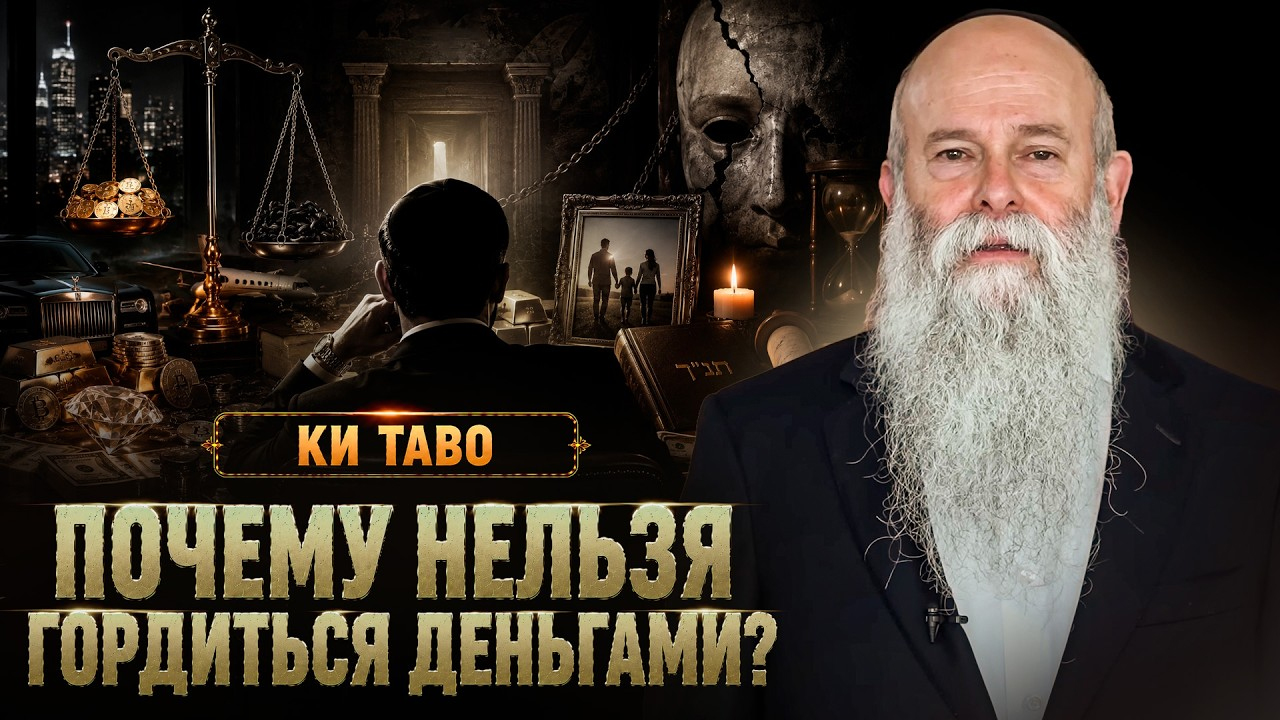
A new episode has been released on the “Menorah” YouTube channel as part of the weekly Torah lesson series by Chief Rabbi of Dnipro Shmuel Kaminezki, dedicated to the Torah portion of Ki Savo. In this lesson, the Rav speaks about wealth, freedom, and responsibility, and reveals why material success alone does not mean that a person is truly free.
Parshas Ki Savo serves as the foundation for a discussion about the mitzvah of Bikkurim—the first fruits of the harvest that a person would bring to the Temple as an expression of gratitude to the Almighty. This mitzvah might seem to be about prosperity and well-being. Yet it is precisely here that the Torah invites a person to let go of the sense that everything was achieved solely through their own efforts, and to remember the Source of their success.
Rav Shmuel Kaminezki draws attention to a paradox: money can give a person freedom, but it can also make them a slave. Debts, the fear of losing one’s fortune, dependence on banks, and the constant drive to accumulate more can strip a person of inner freedom. Therefore, wealth requires not only the ability to acquire and preserve it, but also a particular attitude toward it—gratitude, modesty, and a willingness to share with others.
The Rav also speaks about why these values are especially important for family and raising children. True inheritance is not only property and financial means, but also one’s attitude toward money, the ability to remain grateful, to help others, and to remember one’s values. It is this approach that allows one to preserve not only one’s fortune, but also the person who possesses it.
This episode will be of interest to anyone who reflects on money, success, and true freedom. Why does wealth sometimes become a source of dependence? Why does a successful person need modesty? And what should be passed on to children along with material inheritance? Watch the new lesson by Rabbi Shmuel Kaminezki on the Menorah channel and share your thoughts in the comments.