



Every year on 19 Kislev, Jews throughout the world mark the Day of the Release of the Alter Rebbe, Rabbi Schneur Zalman of Liadi. This day — the New Year of Chassidus — is traditionally one of the most significant holidays for the majority of Jewish communities in Ukraine.
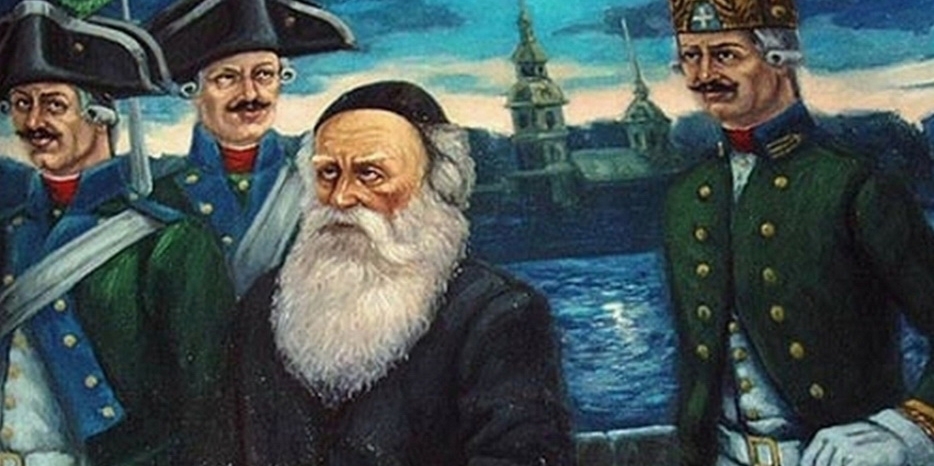
The holiday of the New Year of Chassidus arose 228 years ago. Then, on 19 Kislev 5559 from the creation of the world (November 27, 1798), the Rebbe Schneur Zalman of Liadi, founder of the Chabad chassidic movement, was released from imprisonment in the Peter and Paul Fortress, where he had spent almost two months. His release became a sign of the official recognition of the chassidic movement in the Russian Empire. This event appeared at that time so significant and wondrous that the chassidim even wanted to write a scroll of 19 Kislev, in the manner of the Scroll of Esther, to read it every year, but the Alter Rebbe did not give his consent to this.
In one of his talks, the Rebbe Rayatz related:
“When the Alter Rebbe was brought to Petropavlovka, he was placed in the secret cells of the Peter and Paul Fortress. For more than seven weeks (53 days) he was in this fortress. For the first three weeks the Rebbe was held in extremely harsh confinement, in cells intended for those rebelling against the kingdom, since one of the main accusations of the denunciation was that the Alter Rebbe [allegedly] collected money and sent it to the Turkish Sultan. Later he was transferred to a place with milder conditions [of confinement] within the same fortress.
All the days while the Alter Rebbe was in [confinement] in the Peter and Paul Fortress, special sessions were held, which selected and reworked the materials of the denunciation against our Rebbe. After this the Rebbe was interrogated. The interrogations took place not in the fortress but in the offices of the ‘Secret Council,’ whither the Rebbe was each time transported by boat across the Neva River — from the fortress to the offices.
The czar’s ministers themselves interrogated the Alter Rebbe, and he answered them on all their questions. The answers and questions were recorded and sent to the Senate for study. All saw in the Alter Rebbe’s answers his wondrous wisdom and the purity of his heart.
On Tuesday, 19 Kislev, the verdict concerning the Alter Rebbe was made public, stating that he was clean of every sin, and a decision was adopted concerning his release.”
It is known that the Emperor Paul I himself wished to visit the Rebbe in his confinement. He did so in the guise of a simple officer. Although the Alter Rebbe had never before seen the Russian czar, he immediately sensed who was before him and rendered the czar the marks of respect that Jewish law prescribes toward a monarch. From that moment the czar called the Rebbe nothing other than “the Holy Rabbi.” The Emperor Paul I personally signed the final decision, which stated: “His Imperial Majesty has found nothing bad in the behavior of the chassidim that causes harm to the integrity and tranquility of the state.” Thus a new holiday appeared in the Jewish calendar: 19 Kislev — Rosh Hashanah of Chassidus, or the chassidic New Year. Very little time passed, and the Chabad movement strode far beyond the borders of Ukraine, Belarus, and Russia, spreading the sources of the Teaching of the Baal Shem Tov throughout the world.
It is precisely on the day of 19 Kislev that it is customary to begin the annual cycle of reading the foundational book of chassidic philosophy written by the Alter Rebbe — the book “Tanya” (“Likkutei Amarim”).