




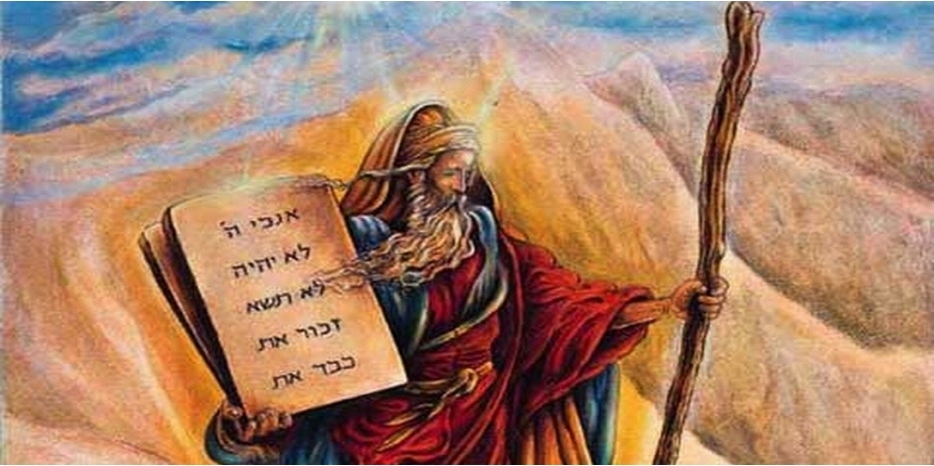
The 7th of Adar marks both the birth and yahrzeit of Moshe Rabbeinu. Moshe Rabbeinu came into the world at a very difficult time for the Jewish people, when our ancestors were slaves in Egypt. Pharaoh, the ruler of Egypt, learned from his court astrologers that a child would be born—a boy who would one day free the Jews from Egyptian slavery. To prevent this, the cruel Pharaoh ordered that all newborn Jewish boys be thrown into the Nile.
The Jews were in turmoil; it seemed they were in a hopeless situation. It was clear to everyone that Pharaoh sought the destruction of the Jewish people. Moshe’s father, Amram, the leader of the Jews in that generation, separated from his wife Yocheved because he believed their children would be doomed to death anyway. Following his example, all Jewish men did the same—they separated from their wives.
But Pharaoh’s plans were not destined to succeed. Hashem revealed Himself to Moshe’s sister, Miriam, and she learned that her mother was destined to give birth to a son who would save Israel. Miriam managed to convince her father that his decision was even crueler than Pharaoh’s decree and would have even more devastating consequences. Pharaoh had condemned only the boys to death, but Amram’s decision made it impossible for girls as well as boys to be born. So Amram returned to his wife Yocheved, and all the other Jews returned to their wives as well.
Soon after, Moshe was born. For three months, his mother managed to hide the infant from the Egyptians. Eventually, it became impossible to conceal the child any longer, and Yocheved had to place the boy in a basket and bring him to the Nile River. As soon as Moshe was placed there, the Egyptian astrologers, based on the configuration of the stars, concluded that the child destined to free the Jews had been cast into the Nile and had surely perished, for the Nile, as is known, teems with crocodiles. After this, Pharaoh rescinded his cruel decree.
However, Moshe was saved by Pharaoh’s daughter, raised in the palace as a prince, but after rising up against the cruel oppression of the Jews by the Egyptians, he was forced to flee Egypt. Many miraculous events occurred with Moshe Rabbeinu before he could truly fulfill his mission. Moshe became the greatest of prophets and the savior of the people of Israel. He was destined to perform great wonders in Egypt, to split the Yam Suf (Red Sea), to receive the Torah on Mount Sinai, and to accomplish many, many other things. Moshe Rabbeinu lived a full 120 years and died on the day of his birth—the 7th of Adar. The Torah says: “And he was buried in the valley… and no one knows the place of his burial to this day” (Devarim 34). Hashem Himself attended to his burial.
It is interesting to note that the gematria (numerical value) of the Hebrew words “Moshe Rabbeinu” equals 613, corresponding to the number of mitzvos in the Torah that Moshe received from Hashem at Mount Sinai.