



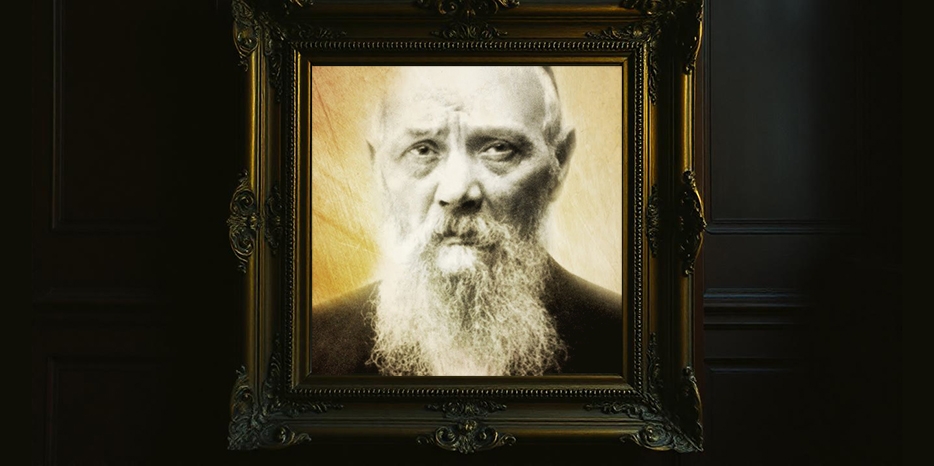
Today, 20 Av, Jews around the world mark the yahrzeit of Rabbi Levi Yitzchak Schneerson, the father of the Seventh Lubavitcher Rebbe, Rabbi Menachem Mendel Schneerson. He served as the Chief Rabbi of Yekaterinoslav-Dnepropetrovsk from 1909 to 1939 and is regarded as the founder of the modern Jewish community of our city.
In honor of this commemorative date, numerous events are taking place worldwide in memory of Rabbi Levi Yitzchak – farbrengens, shiurim, and special sessions. In Dnipro, there will also be lessons and farbrengens dedicated to Rabbi Levi Yitzchak Schneerson.
The great son of Rabbi Levi Yitzchak, the Leader of our Generation, the Seventh Lubavitcher Rebbe, Rabbi Menachem Mendel Schneerson, particularly emphasized the significance of this day and the collection of tzedakah in honor of the tzadik. At one of the farbrengens in honor of 20 Av, the Rebbe said: “When something is not mentioned, people might think that in our time it is no longer relevant. Therefore, we remind about the Fund of Levi Yitzchak. I believe that flyers will be distributed, and everyone will give as much as they can, and even much more than they initially intended. And the Almighty will certainly repay this many times over… and even five hundred times over, in the literal sense of the word…”
By tradition, let us briefly recall the biography of the great tzadik and kabbalist.
Levi Yitzchak ben Zalman Schneerson was born on 18 Nissan 5638 (1878) in the town of Poddobryanka near Gomel. His lineage traces back to the Third Lubavitcher Rebbe, the Tzemach Tzedek. Levi Yitzchak began studying Torah under the guidance of the rabbi of Poddobryanka, Yoel Chaikin – his maternal uncle. He quickly surpassed his teacher and continued studying sacred texts independently. The Rebbe Rayatz wrote that “from his early years, Levi Yitzchak was distinguished by extraordinary abilities and diligence.” He received his rabbinic certification (semikhah) from the greatest authorities of the time: Rabbi Eliyahu Chaim Meizel of Lodz and Rabbi Chaim of Brest.
In 1900, Rabbi Levi Yitzchak married Chana, the daughter of Rabbi Meir Shlomo Yanovsky. The match was arranged by the Fifth Lubavitcher Rebbe, Rabbi Sholom Dovber Schneerson. After the wedding, the young couple moved to Nikolayev, where Chana’s father served as rabbi. In Nikolayev, on 11 Nissan 5662 (April 18, 1902), a son, Menachem Mendel, was born to Levi Yitzchak and Chana. Later, two more children were born into the family: Dov Ber and Yisrael Aryeh Leib.
In 1907, Rabbi Levi Yitzchak’s family moved to Yekaterinoslav. They settled on the second floor of building No. 20 on Zheleznaya Street (now Myronova). Later, from 1928 to 1934, they lived at building No. 15 on the corner of Zheleznaya and Upornaya (now Hlinky). Their last apartment was on Barrikadnaya Street, 13.
In 1909, at the age of 31, Rabbi Levi Yitzchak was invited to serve as the rabbi of the Yekaterinoslav community, one of the largest in Russia – home to about 50,000 Jews, comprising 40 percent of the total population. There were 12 synagogues, a yeshiva, and about 1,500 children studied in cheders, while the rest attended 16 private Jewish schools.
The wave of Jewish pogroms in 1905 did not spare Yekaterinoslav either. Over a hundred people were killed, more than two hundred were wounded, and about 300 Jewish shops were looted and burned. Hundreds of poor families were left homeless and without means of subsistence. Many left the city, emigrating to America and Palestine. The instigators of the pogrom were later tried and found guilty, but Tsar Nicholas II pardoned them, clearly showing which side the autocracy was on.
Out of fear for their lives, Jews began to drift away from the religion of their fathers. Among the youth, whose Jewish faith hindered their education, cases of baptism became more frequent.
Such was the atmosphere in the Jewish community when Rabbi Levi Yitzchak assumed his duties as rabbi in Yekaterinoslav.
His election was not without opposition. The local intelligentsia, who would have preferred to see a less orthodox spiritual leader, opposed the young rabbi’s candidacy. They turned to the most authoritative figure in the city, engineer Sergei Pavlovich Paley, one of the leaders of the Zionist organization, and asked him to use his influence to prevent the election of a Chassid from the Schneerson dynasty as rabbi. Paley replied that he did not like being led by others. He decided to meet the candidate himself and went to Rabbi Levi Yitzchak. They spoke for six hours straight, and after the conversation, Paley became one of the most ardent supporters of the new rabbi.
Having assumed leadership of the Yekaterinoslav Jewish community, Rabbi Levi Yitzchak devoted himself entirely to fulfilling his numerous and varied duties. His first priority was to secure the construction of a new mikvah, as the old one had fallen into disrepair. However, the community leaders did not support him, citing a lack of funds. Rabbi Levi Yitzchak then took off his new coat and placed it on the table. “It cost me a considerable sum,” he said, “but a mikvah is more precious to me, and I donate my coat to its construction.” The rabbi’s conviction moved the indifferent. Soon, a new mikvah was built in the city.
In a short time, the rabbi’s authority grew so strong that people turned to him to resolve any problem or dispute, knowing that his advice would be wise and fair. Rabbi Levi Yitzchak soon gained fame beyond Yekaterinoslav. His phenomenal memory, sharp intellect, and comprehensive knowledge placed him among the foremost rabbis of his time. The Fifth Lubavitcher Rebbe, Rabbi Sholom Dovber Schneerson, often sent him abroad, where he met with prominent rabbis and public figures.
Recalling episodes from their life, the Rebbetzin Chana told how once, while traveling to Warsaw, a famous writer joined them in their compartment. A conversation began between him and the rabbi. The engaging discussion attracted the attention of other passengers, and people from other cars stopped to listen. Gradually, a crowd gathered near the compartment, and although the conversation lasted all night, no one left.
During one trip to Germany, while staying in Wiesbaden, Rabbi Levi Yitzchak was visited by the local rabbi. A conversation began, but soon it turned into a monologue by Rabbi Schneerson – the guest listened intently, his mouth agape.
As they parted, the admiring rabbi strongly advised Rebbetzin Chana to write down her husband’s teachings for publication in a separate book.
Rabbi Levi Yitzchak wrote commentaries on all sections of the Torah. When he was arrested, thousands of his written pages remained at home. Regrettably, most of the priceless manuscripts were confiscated, and what survived the NKVD’s raid was destroyed by the Nazis. As they occupied cities, they annihilated not only Jews but all Jewish relics.
Rabbi Levi Yitzchak Schneerson paid special attention to Jewish communal work, showing true self-sacrifice when help was needed. In this regard, special mention should be made of his efforts to provide matzah to Jewish soldiers during the Russo-Japanese War of 1904-1905, as well as his assistance in preparing defense materials during the infamous “Beilis Case.”
After the February Revolution of 1917, when the Provisional Government proclaimed democratic freedoms, various organizations and unions began to emerge. Rabbis and Jewish public figures also formed their own organization. Its first congress in Moscow was to devise its program and present its demands to the government. One of the active participants was Rabbi Levi Yitzchak Schneerson. Similar assemblies were held in Petrograd, Ukraine, and Belarus; in the summer of 1917, a commission was formed from representatives of all these organizations. However, the October coup destroyed the newly born democracy.
As is known, under Soviet rule, a frenzied anti-religious campaign began. The “Yevsektsiya” (Jewish section of the Communist Party) was particularly active. Rabbi Levi Yitzchak engaged in fearless struggle against all forms of religious persecution. Using the Soviet leaders’ formal statements about religious freedom and human rights, he resolutely defended the religious needs of Jewish communities.
Condemning the Soviet authorities’ anti-religious actions, the Pope issued an appeal to the free world, calling for a boycott of Soviet goods. He declared a crusade against militant Soviet atheism. In response, the Soviet authorities took countermeasures. Along with official denials, a statement was released signed by 32 Belarusian rabbis, claiming that the Pope’s appeal was untrue and that there was no discrimination against believers or clergy in the country. These rabbis were gathered in Minsk and forced under threats to sign an outright lie.
A similar declaration was demanded from Ukrainian rabbis, for which a rabbinical congress was convened in Kharkov. Knowing the influence Rabbi Levi Yitzchak Schneerson wielded, the head of the NKVD in Dnepropetrovsk summoned him for a conversation and explained what benefit the rabbis would bring to the Soviet regime by signing the declaration. He then handed the rabbi a free first-class ticket to Kharkov on the express train. However, Rabbi Levi Yitzchak did not accept the handout. He thanked him and said he was still able to travel to Kharkov at his own expense.
At the congress, there were more NKVD agents than rabbis, but this did not deter Rabbi Levi Yitzchak. He declared that he could not sign a declaration based on deceit. His bold and open speech gave courage to the hesitant. The congress dragged on for several days, as Rabbi Levi Yitzchak continued to explain to everyone the tragic consequences that signing a false document could bring. The Ukrainian Minister of Education summoned Rabbi Levi Yitzchak and accused him of “hostile acts” against the Soviet regime. It was clear what such accusations meant in the 1930s. However, Rabbi Levi Yitzchak was not intimidated, did not change his position, and his steadfastness influenced other delegates. In the end, the congress was closed without any resolution.
Yet Rabbi Levi Yitzchak believed that the victory would not hold if the Bolsheviks managed to conceal the truth about the failed rabbinical congress. He managed to smuggle information about the congress abroad, and it was widely published in the world press. A scathing caricature appeared: a rabbi on his knees before a chair where a document lay, while a soldier aimed a revolver at him, demanding his signature.
In 1939, a Soviet population census was conducted. Everyone had to indicate in the questionnaire: believer or non-believer. After years of religious persecution, people were afraid to tell the truth and often wrote “no,” even though they were truly believers. When Rabbi Levi Yitzchak learned of this, he gave a fiery speech in the synagogue, urging those present that Jews must not hide their faith in the One G-d.
Naturally, the rabbi’s words reached the NKVD, which had informers everywhere, including in the synagogue. When the rabbi was arrested, this accusation was also brought against him during the investigation. Rabbi Levi Yitzchak replied that the authorities were presumably interested in truthful information during the census, and by urging people to tell the truth, he was only helping the government.
On 9 Nissan 1939, at three in the morning, NKVD agents burst into the rabbi’s apartment. After a search lasting many hours, they took his books, papers, manuscripts, and arrested him. All attempts by his wife to find his whereabouts long remained unsuccessful.
The NKVD investigators did everything possible to fabricate charges of anti-Soviet activity and sentence Rabbi Levi Yitzchak to execution, but the prisoner’s steadfast behavior thwarted their plans. Unable to force him to confess to the “crimes,” they exiled him to Kazakhstan.
He lived there in a remote town, but in the nearby city of Kyzylorda, there were many Jews during the war. Some knew Rabbi Levi Yitzchak personally, while others had heard of the renowned rabbi. They sometimes visited him and discussed religious topics.
The rabbi had no paper to write down his thoughts and would sit for hours in deep thought. Later, with great difficulty, permission was obtained for him to move to Alma-Ata. There, he was warmly received, and once again, his home became a center attracting many people. They saw Rabbi Levi Yitzchak as a teacher and mentor, but his health was already failing.
His condition worsened day by day. There is a witness account of Rabbi Levi Yitzchak’s final day in the book “Toldot Levi Yitzchak”:
“On Tuesday night, I and another [man] were privileged to be by his bedside all night […]. His lips moved constantly, but no voice was heard. Suddenly, he regained consciousness, opened his eyes, and asked for water to wash his hands. When the water was brought, he said: ‘It’s time to move to the other side!’ These were his last [consciously spoken] words. The next day, Wednesday, 20 Menachem Av, his condition worsened; he suffered from severe pain and was delirious. One of those present put his ear to his lips to hear what he was whispering and heard fragmentary words uttered with a groan: ‘V’ikvseho l’neidu… Ai, ikves Meshicho… Ikves Meshicho…’ By evening […] his pure soul left his body and ascended to Heaven.”
His grave in the Jewish cemetery of Almaty became a place of pilgrimage. In 1989, the Soviet authorities fully rehabilitated Rabbi Levi Yitzchak Schneerson and acknowledged their culpability in his death. In 1995, a three-volume biography of Levi Yitzchak was published in the United States and Israel.