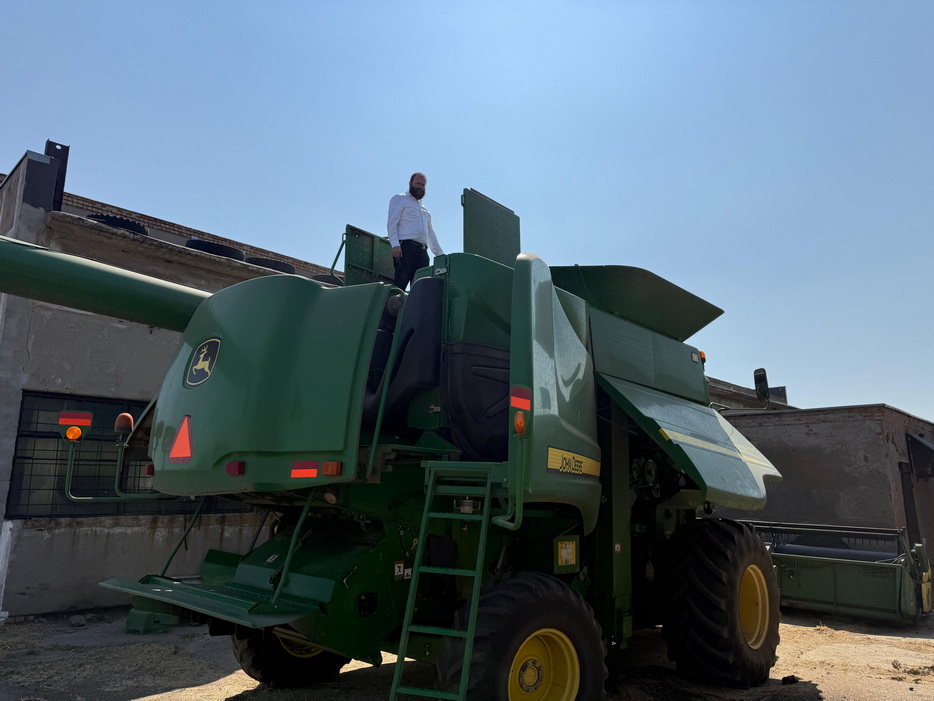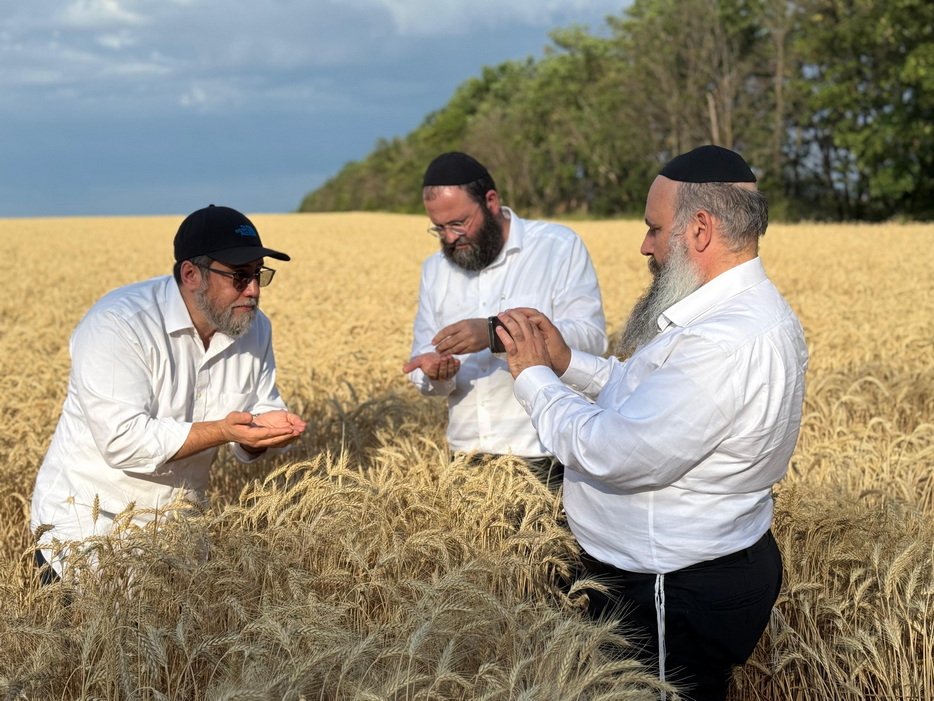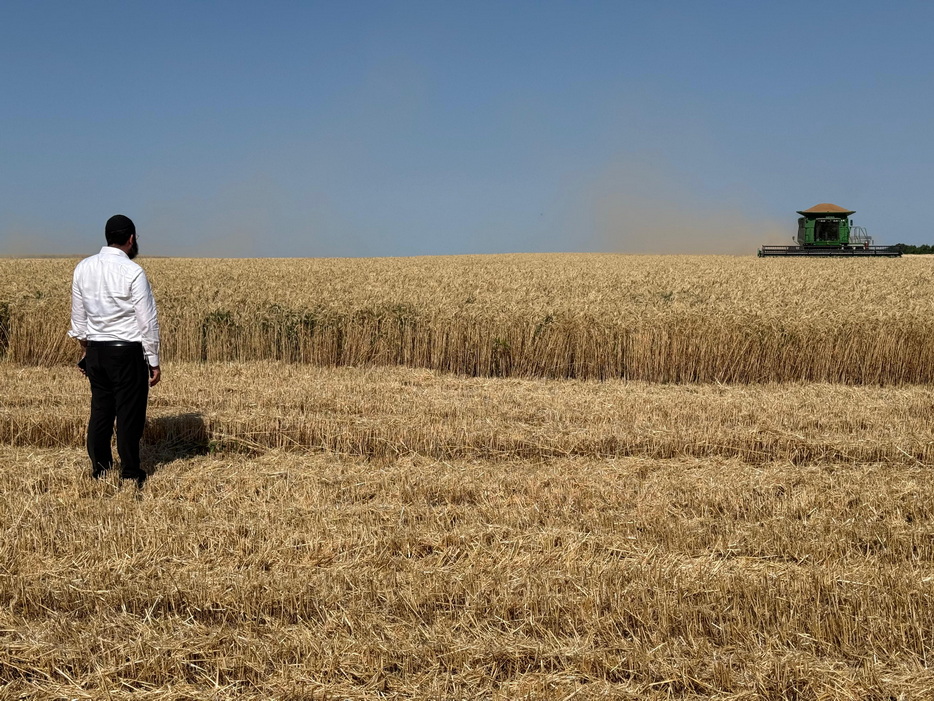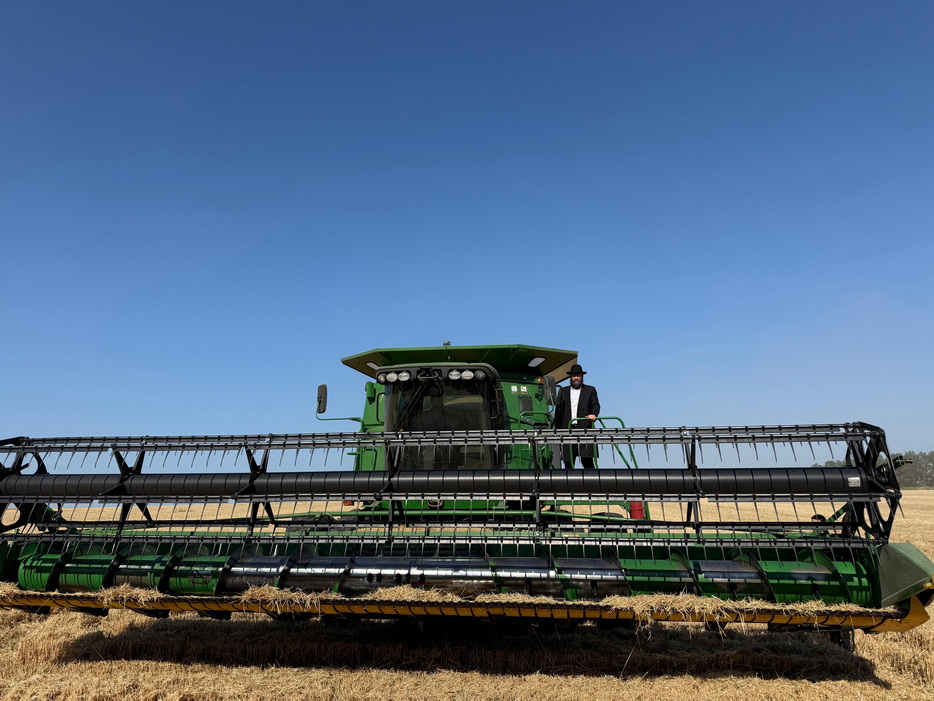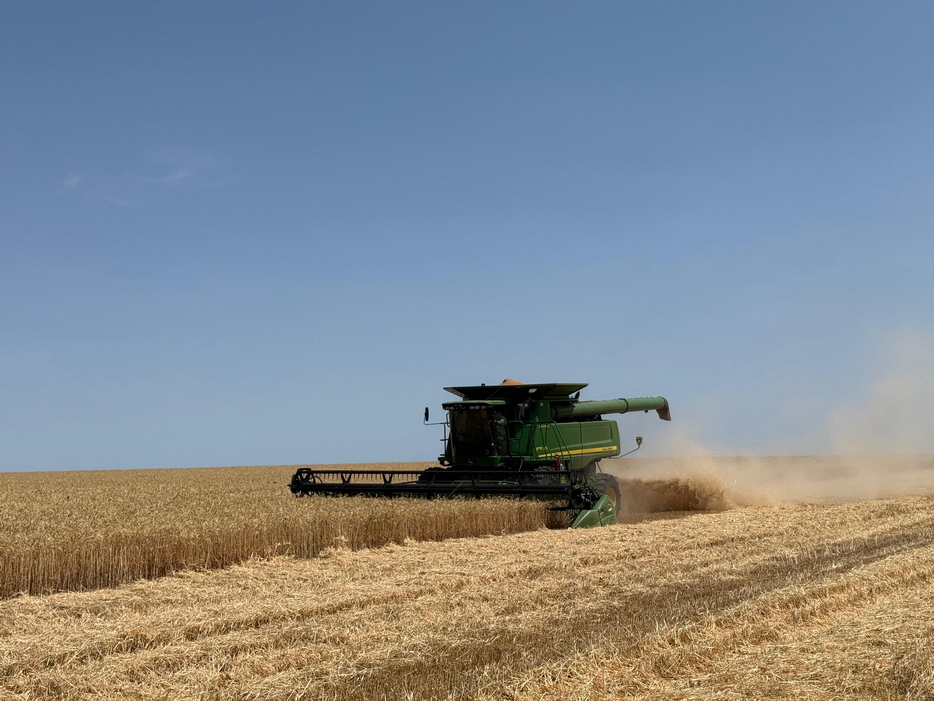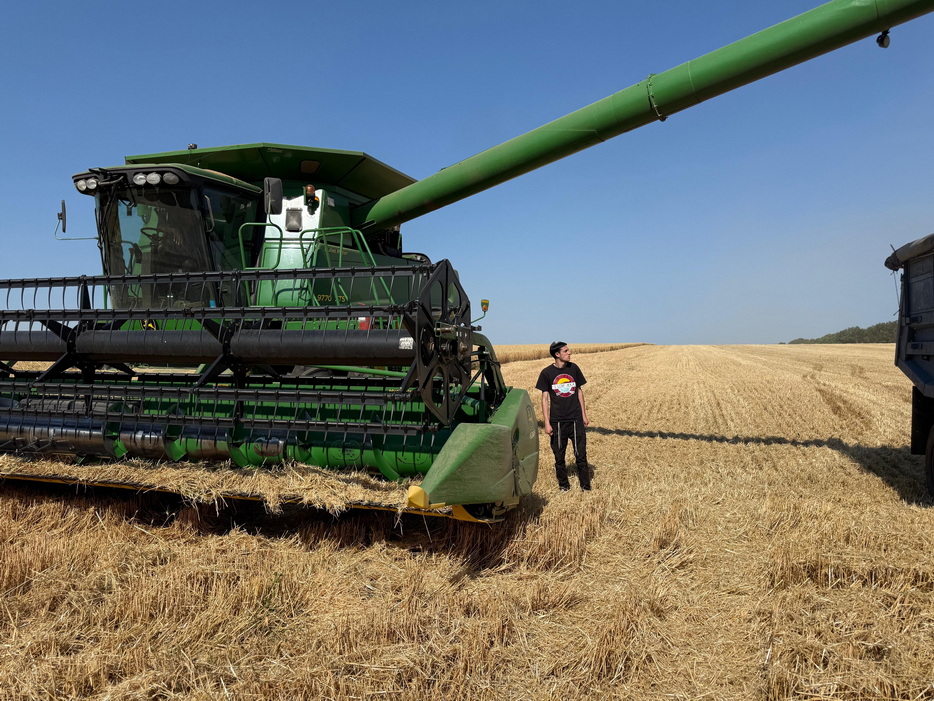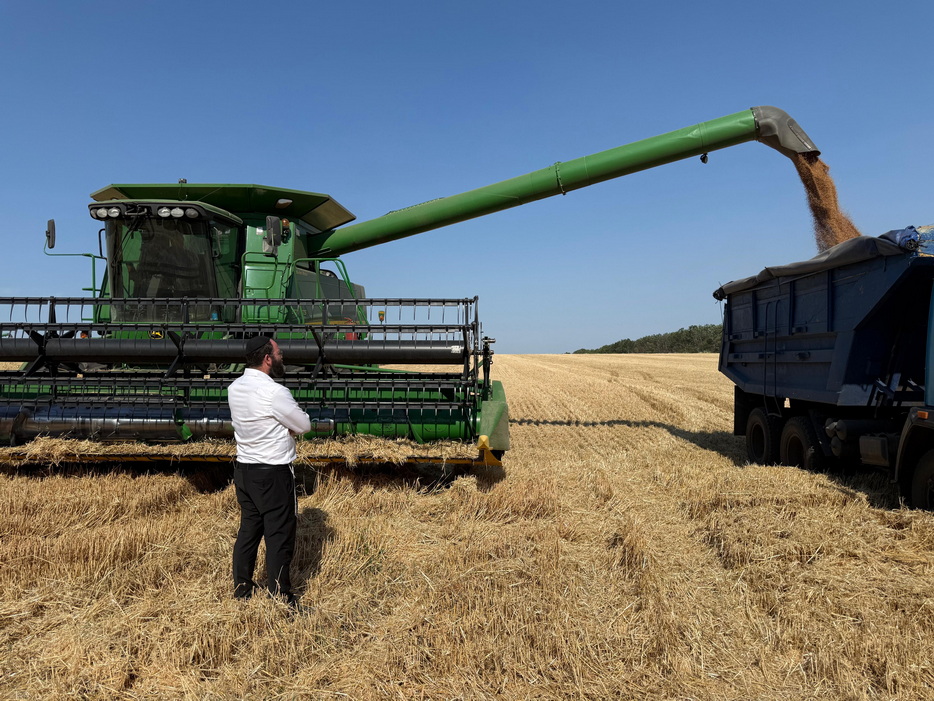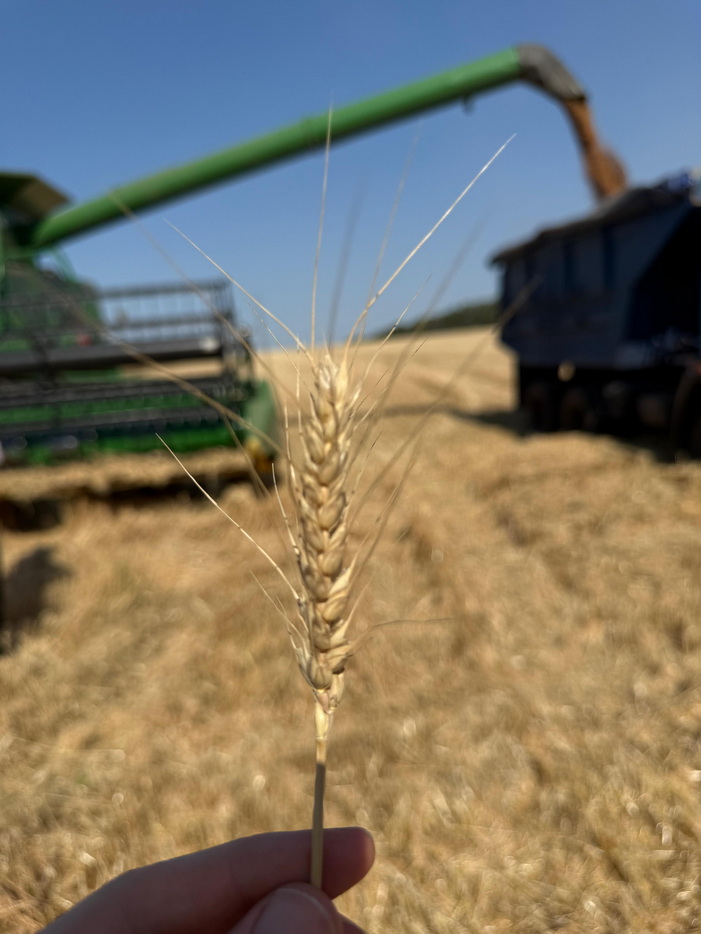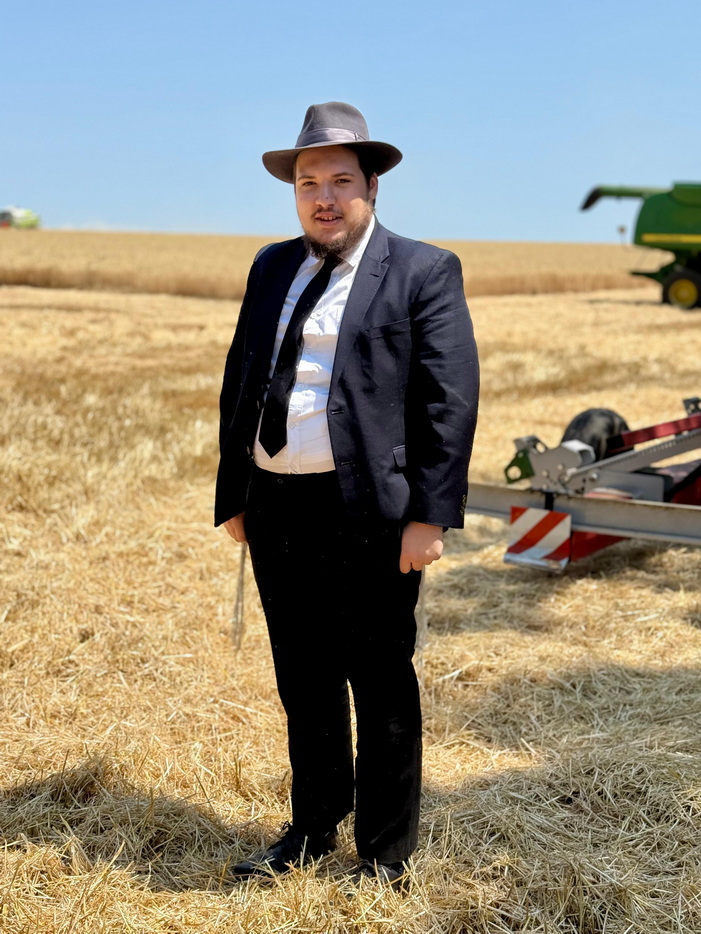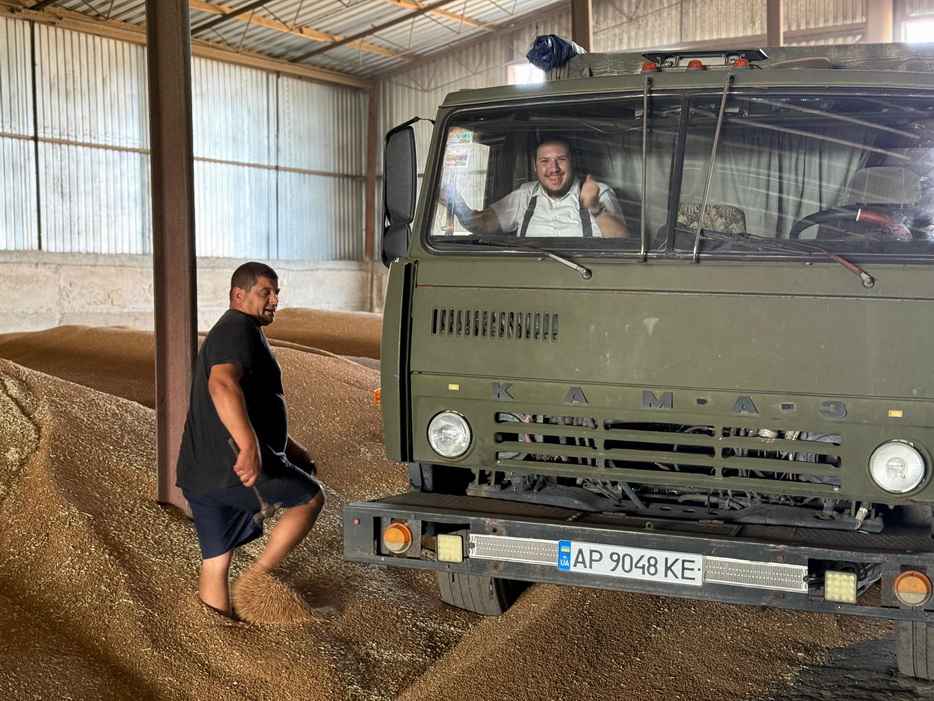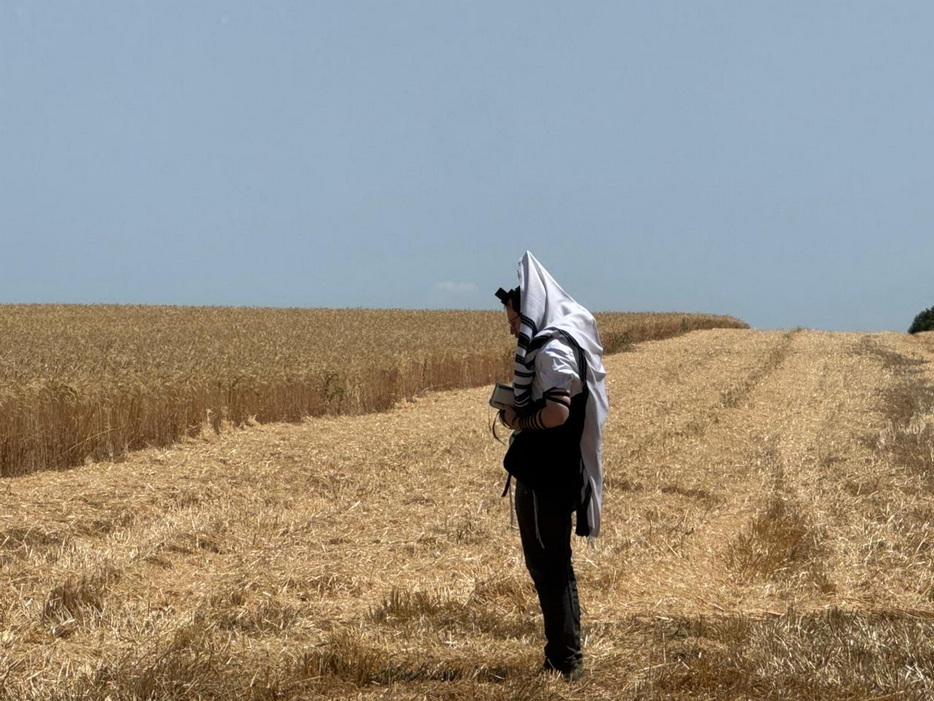




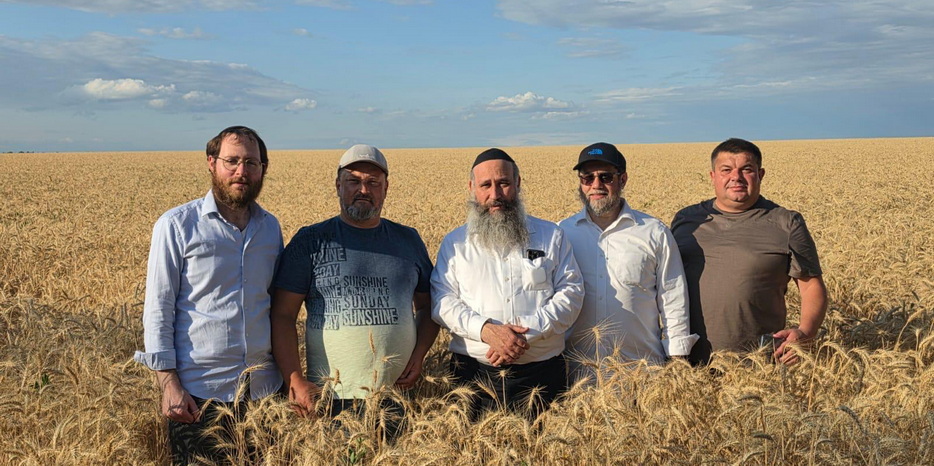
A very important stage in the production of special handmade matzah for the Pesach holiday has been completed – the harvest of wheat designated for the production of matzah shmurah for the renowned “Tiferet Matzot” matzah bakery in Dnipro, as well as for the matzah bakery in Uman. The production of this matzah, which has the highest religious status, is conducted under the hashgachah of the Chief Rabbi of Dnipro, Shmuel Kaminezki.
The harvest took place in the presence of Rabbi Mayer Tzvi Stambler, Chairman of the Federation of Jewish Communities of Ukraine; Rabbi Yisroel Gurevich, head of the Kashrut Department of the Dnipro Jewish Community; Rabbi Elisha Baram, who previously headed this department for many years; and Rabbi Shlomo Weinfeld, representing the international organization “OK Kosher” (Israel), as well as with the participation of a team of mashgichim who provided continuous supervision over all stages of the work.
“What we witnessed this year during the harvest can truly be called a miracle,” said Rabbi Yisroel Gurevich. “We knew that we had very little time for the harvest. As soon as the wheat fully ripens, even a light rain can render it unfit for the production of matzah shmurah due to concerns about chametz. That is precisely why last year we had to forgo the wheat procurement altogether. And this year, almost throughout the entire region, it rained for several days in a row, but the very field chosen for the harvest remained under bright sunshine throughout that time. Moreover, on the day of the harvest, a severe thunderstorm with torrential rain raged over Dnipro, yet on our field it was completely dry. The next day, after the entire crop had been safely harvested and placed in a secure location, rain also fell on that field. That day, Rabbi Meir Tzvi Stambler said words that, I believe, best convey our shared feeling: ‘We witnessed a true miracle during the harvest of wheat for matzah shmurah. It is very important to notice miracles when they happen and to thank the Almighty.’ It was with such feelings that we concluded that day, for when a person merits to fulfill such an important mitzvah and at the same time sees with their own eyes how the Almighty assists in the fulfillment of His will, it fills the heart with special gratitude and inspiration.”
The exceptionally short window available for the harvest is determined by the fact that, from the perspective of Jewish law, the grain in the ear is considered part of the plant only as long as it is filling and developing. However, once the vegetation process is complete and the grain is fully ripe, it is already considered a separate product, even if still in the ear. Contact with water can then cause it to become leavened, just as if it had already been harvested, threshed, and consisted of separate wheat kernels. To obtain matzah shmurah, it is necessary to harvest during that brief period when the rabbi determines that the grain has already ripened, but before even a single drop of rain falls on it.
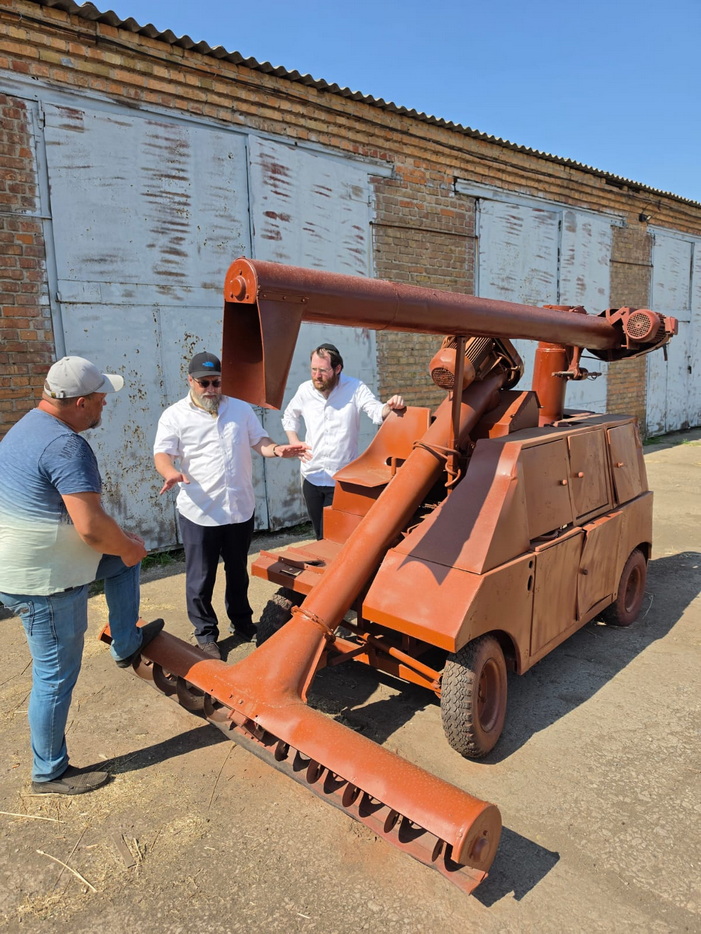
“This is precisely why the supervision of the rabbis is so important from the moment the field is chosen and the wheat is monitored. From the moment of ripening, this supervision becomes practically continuous,” Rabbi Yisroel Gurevich continued. “Everything is under supervision: the field, the wheat itself, the harvesting machinery, transportation, grain storage, milling, and finally, the baking of the matzah. We do not merely monitor compliance with technical requirements. We strive to ensure that every matzah is produced exactly as Halachah requires and can be used for the fulfillment of one of the most important mitzvos of Pesach.”
The production of matzah shmurah is a very complex and labor-intensive process, not so much because of the technology itself and the large amount of manual labor involved, but primarily because of the need to observe numerous religious requirements and regulations that provide consumers with complete confidence that they are receiving a product that guarantees the precise fulfillment of one of the most important mitzvos of Pesach. This is precisely why the production of such matzah is supervised by rabbis who possess recognized authority and are known as specialists of the highest competence.
“Matzah produced from Ukrainian wheat at the ‘Tiferet Matzot’ bakery in Dnipro and the Uman bakery, under the hashgachah of the Chief Rabbi of Dnipro, Shmuel Kaminezki, is well-known and highly valued by Jewish communities in many countries around the world,” said Rabbi Yisroel Gurevich. “The highest quality of Ukrainian wheat, combined with the strict observance of the laws of kashrus, has made it sought after far beyond Ukraine’s borders. Each year, hundreds of Jewish communities from different countries around the world order this very matzah for Pesach. We do everything to ensure that matzah shmurah helps thousands of Jews fulfill this most important mitzvah. This brings great nachas to the Rebbe and further strengthens the authority of the united and cohesive Dnipro Jewish Community under the leadership of Chief Rabbi Shmuel Kaminezki.”