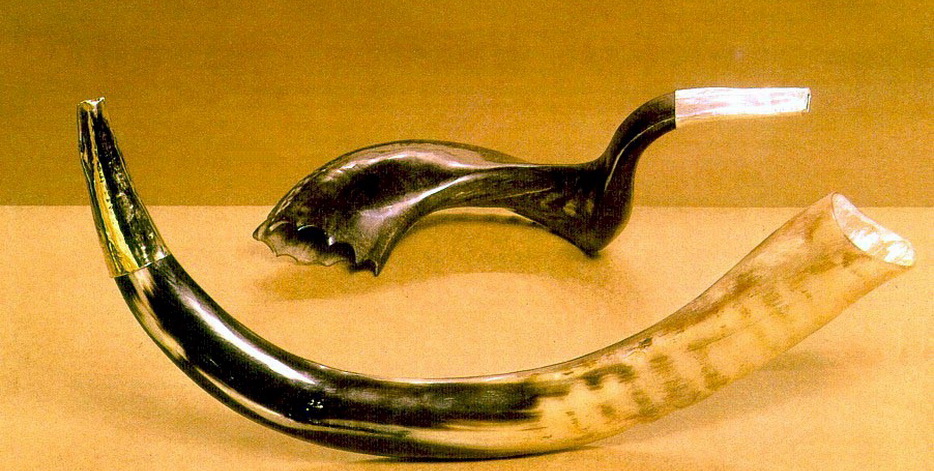





On all days of the month of Elul, except for Shabbat and the eve of Rosh Hashanah, Jews observe a beautiful and ancient custom: they listen to the blowing of the shofar, the sounds of which are said to have a special effect on the Jewish soul, awakening it from the sleep of everyday life, for it is said: “If the sound of the shofar is heard in the city, can the people not be alarmed?”
Not long ago, our website wrote about the origins of the shofar tradition, its significance for Jews, and how the shofar is blown during the month of Elul. Today, we present to our readers a piece devoted not so much to an interpretation of the meaning and symbolism of this custom, but rather to the history of the musical instrument itself, the characteristics of its sound, and the technology of its manufacture.
The shofar is considered one of the oldest musical instruments on Earth. In the Written Torah, it is a musical instrument primarily used for military signals or to draw the attention of the people to some important announcement. Thus, in the Talmudic era, the shofar was blown on the eve and at the end of holidays and Sabbaths to alert the people. This custom survived only in the Yom Kippur ceremony, during which those present wish each other to meet in Jerusalem next year. In the Middle Ages, the custom of blowing the shofar at the end of the morning service arose throughout the month of Elul.
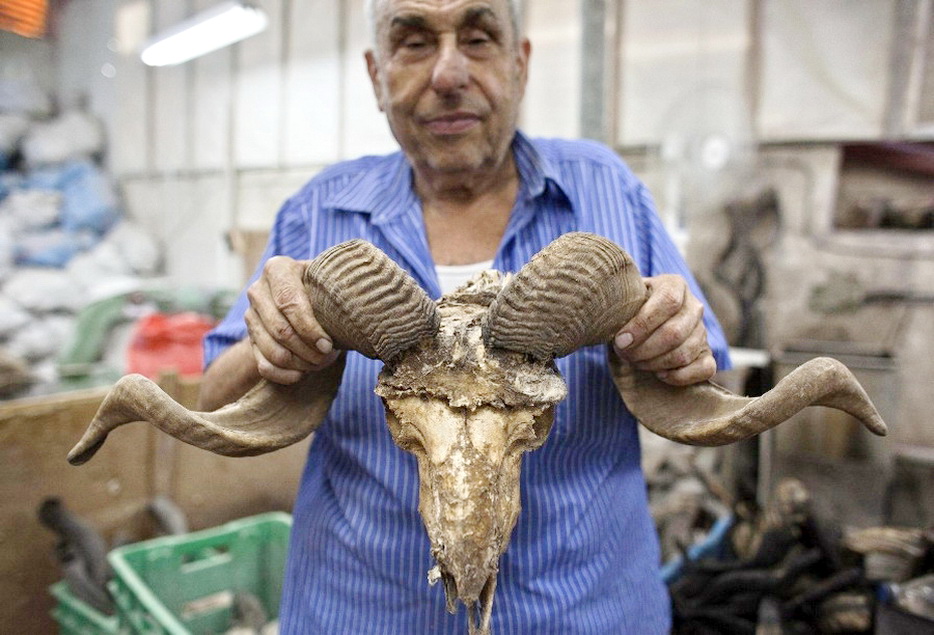
Typically, a shofar is made from a ram’s horn. It is believed that the ram’s horn is the most suitable for a shofar, as this animal is associated with Isaac’s sacrifice. Furthermore, the word “shofar,” which means a musical instrument, is cognate in Semitic languages with the word for a mountain sheep.
However, according to the Talmud, the horns of other kosher cloven-hoofed animals with twisted horns are also suitable for making shofars, including wild and domestic goats, antelopes, and gazelles. Furthermore, a shofar horn must be hollow—a suggestion suggested by the word “shofar” itself, which shares the same root as the word “shefoferet,” meaning “pipe.”
However, a shofar is never made from the horn of a cow or a bull, and there are two main explanations for this. The Jerusalem Talmud states: “All shofars are called horns and are called shofars, except for a cow’s horn, which is called a horn but never a shofar.” Thus, a cow’s horn is called “keren” in Hebrew, not “shofar,” which refers to the horn of a sheep, goat, antelope, or gazelle (Mishnah Rosh Hashanah). However, the use of cow horns is prohibited, as this evokes associations with the sin of the Golden Calf.
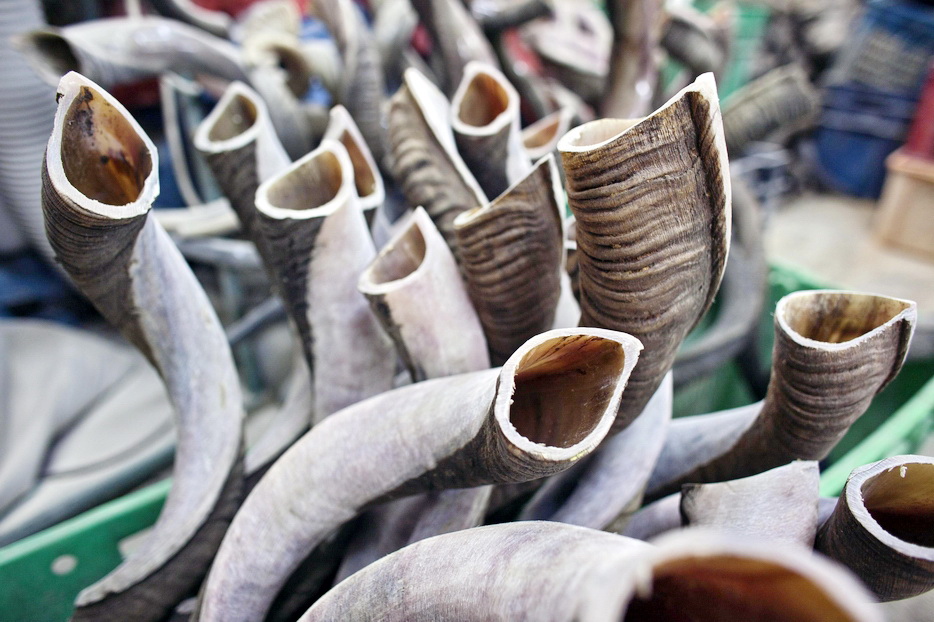
Shofar-making technology has changed significantly over three thousand years—the principles of processing the material for this musical instrument have remained the same, only the tools required have evolved. The process begins with the sawn-off horns being boiled for several days to remove the pulp, after which the actual shofar-making process can begin. Since the ram’s horn is extremely twisted, it is first slightly straightened by holding it over a flame and “unfolding” it with hand force. This is done carefully, as the horn can return to its original shape or crack at any moment. The processed horn is then placed in a special metal mold and secured, where it cools and takes the desired shape.
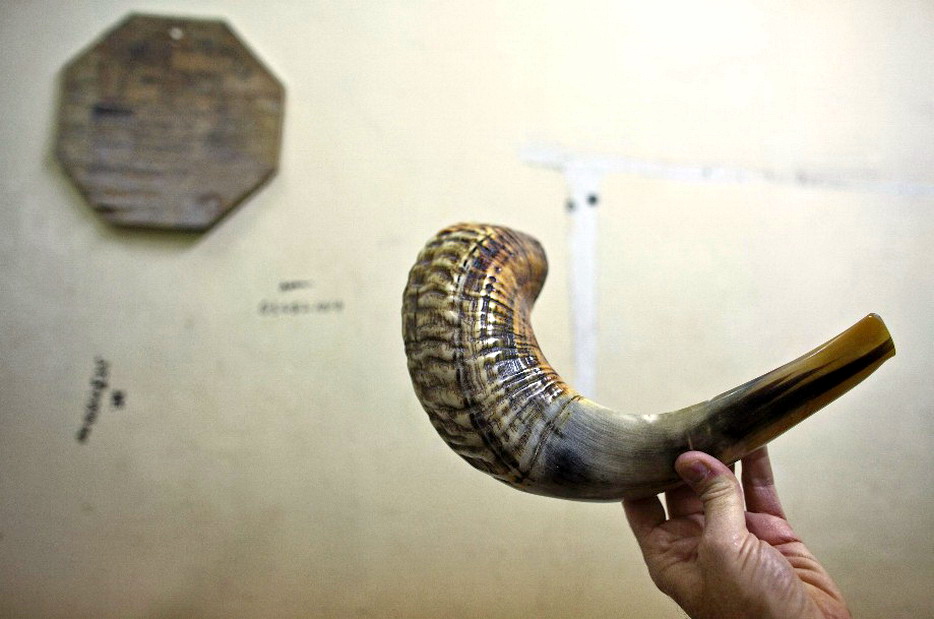
To this day, traditions of processing animal horns to make shofars vary greatly across communities around the world. Some communities believe the shofar horn should be left virtually untouched, without altering its natural shape. Others, however, prefer to heavily work the horn, heating it over a fire to achieve the desired shape. To achieve a smooth finish, the shofar is sharpened on a sharpening strop and finally varnished.
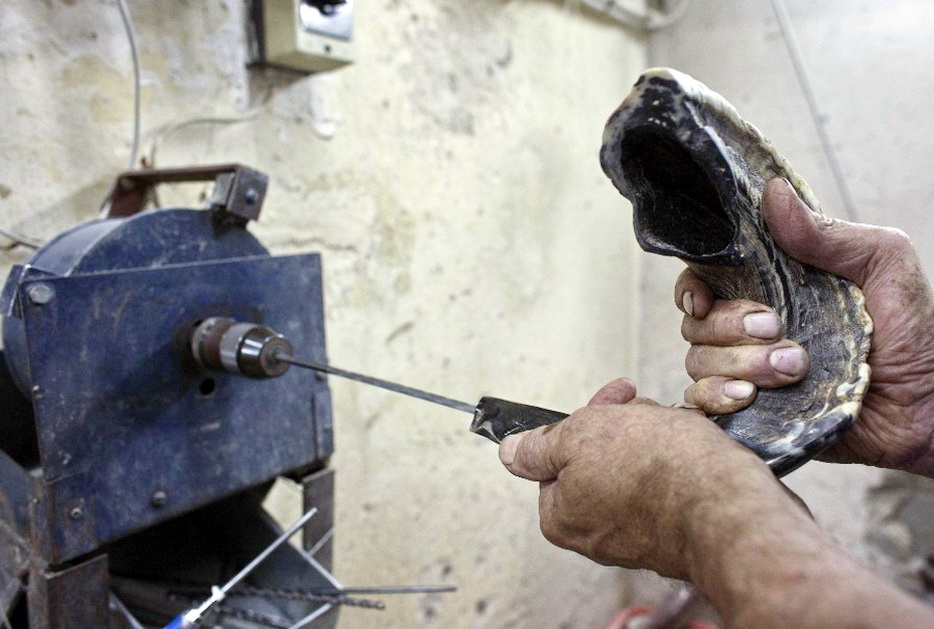
Ancient instruments had no mouthpiece; the tip of the horn was either cut off or a blowhole was drilled into it. Later, shofar making became more complex: it was shaped by steaming, a bell was formed at the wide end of the horn, and the narrow end was stretched, turning it into a “mouthpiece.” A popular method for making a mouthpiece is to saw off the top of the horn with a jigsaw, and a hole is drilled through the cut to create a channel. This channel is then cleaned with wire, treated with fire, and finally shaped into an oval.
A shofar is always made from natural materials, so even the finished instrument retains the natural scent of the animal. Removing it is extremely difficult—craftsmen use a solution of vinegar, bleach, and other odor-eliminating agents. Furthermore, a shofar should never be packaged in a plastic or other case; it should be stored on a special stand, preferably in a dark place.
It is generally accepted that there are two main types of shofar: Ashkenazi and Sephardic. Ashkenazi shofars are finished inside and out, giving them a sickle-shaped form. Sephardic shofars are long and twisted. The shape, size, and sound produced by these instruments can indicate their intended audience and can also shed light on the history of a given country’s Jewish community. For example, Spanish Jews prefer straight shofars. This is explained by the long persecution of Jews and their traditions on the Iberian Peninsula, when even holding a shofar was forbidden. Therefore, men hid their musical instruments under their outerwear, tucked into their belts, and straight shofars were likely easier to conceal. Polish Jews, however, claim that the shofar should produce a “sobbing” sound, perhaps to reflect the suffering of Polish Jews. Yemenite Jews favored large shofars made from the twisted horns of the kudu antelope. They produce a deep, drawn-out, lower-pitched sound, and can even be used to play jazz tunes.
The musical and technical capabilities of the shofar were quite limited. A performer could produce only three or four high, imprecise, but sharp and loud blasts. The Torah mentions two types of blowing: “tki’ah” (a blowing that begins on a lower note and progresses to a higher note with increasing sonority) and “teru’ah” (a series of abrupt blasts on a lower note, ending on a higher note). There are also two types of blowing: “tki’ah gedola” (a “long blowing”), which lasts longer on the upper note (and is always the final blowing), and “shvarim,” which involves rapidly alternating between the lower and upper notes. Blowing the shofar is much more difficult than blowing a trumpet. It requires a specific lip purse, which is quite difficult, and even experienced blowers cannot immediately produce the desired sound.
Shofars are crafted by artisans who pass down the tradition from generation to generation. Today, the most renowned shofar makers are located in Haifa, Tel Aviv (Israel), and Houston (USA).